REVIEW · HELSINKI
Explore Helsinki’s Art and Culture with a Local
Book on Viator →Operated by LocalBini - The go-to platform for Experiences by Locals in Europe · Bookable on Viator
Helsinki art comes with a local script. This 90-minute, small-group walk pairs street-level sights with real talk about contemporary work, so you see the city’s art scene in context instead of just ticking buildings off. I like the photo stops and I like that the local guide ties it all together as you go.
Two things I particularly enjoy: the stops are chosen for impact (yes, you’ll want your camera ready), and the commentary keeps moving so you don’t waste time wondering what you’re looking at. When it gets cold, Anna’s approach can shift toward more indoor time, which makes the whole outing feel smoother rather than rushed.
One drawback to plan around: the tour experience doesn’t include museum entry, so you may still need to pay separately if you want to go inside the art spaces you pass. If you prefer heavy art-history lectures, you might also find the format more city-and-stories than deep artwork analysis.
In This Review
- Key points worth knowing
- How a 90-minute local art walk saves you real time
- Price, time, and what the $129 really buys
- Starting at Ateneum: setting your art lens in Helsinki
- Havis Amanda and the 1908 mermaid: a fountain that turns heads
- A unique modern chapel: where the city mixes faith and form
- Alexis Kivi statue: a quick literary stop with a cultural point
- The granite-bedrock church: why it feels different in person
- An art museum built as a tennis venue: old purpose, new meaning
- Amos Rex at the end: a subterranean futuristic exhibition space
- The guide makes the route feel like a story (Anna’s style)
- Small-group pacing: how to make the most of 8 people max
- Who should book this tour, and who might want something else
- Should you book this Helsinki art-and-culture walk with a local?
- FAQ
- FAQ
- How long is the Helsinki art and culture tour?
- What is the price per person?
- Is the tour offered in English?
- How many people are in the group?
- Where does the tour start and end?
- What is included in the tour price?
- What is not included?
- Is it accessible and close to public transportation?
Key points worth knowing

- Small group of up to 8 keeps the pace conversational and photo stops workable
- English commentary makes modern art and design ideas easier to follow on the move
- Photo-ready highlights like Havis Amanda and the granite-set architecture stops
- A practical art storyline connects street artists, contemporary creators, and what you’re seeing
- Indoor-friendly flexibility is useful when Helsinki weather turns
How a 90-minute local art walk saves you real time
Helsinki can be deceptively easy to walk on your own, but art takes context. This tour is built to give you that context fast. Instead of spending your time googling what each building represents, you get guide commentary while you’re already standing in front of it.
The best value here is not the number of stops. It’s the way the guide links them into an art-and-culture thread. That makes your photos more than pretty—they come with meaning. And because the group stays small (up to 8), you’re not lost in a herd. You can actually hear, ask, and adjust your pace.
You can also read our reviews of more tours and experiences in Helsinki.



Price, time, and what the $129 really buys

At $129 per person for about 1 hour 30 minutes, you’re paying for a guided interpretation of Helsinki’s art and culture, not for a full day of admissions. The tour includes a local who wants to show you the city, delivered as a mobile ticket experience.
Here’s how to think about value:
- If you’re short on time, this is a compact way to get oriented and understand the city’s art scene.
- If you’re planning to enter museums anyway, you’ll likely treat that extra admission as an add-on rather than a surprise—this is the one planning snag to note.
- If you like modern design and street-level creativity, the pace can feel just right: enough stops to see variety, not so many that you get numb.
Starting at Ateneum: setting your art lens in Helsinki
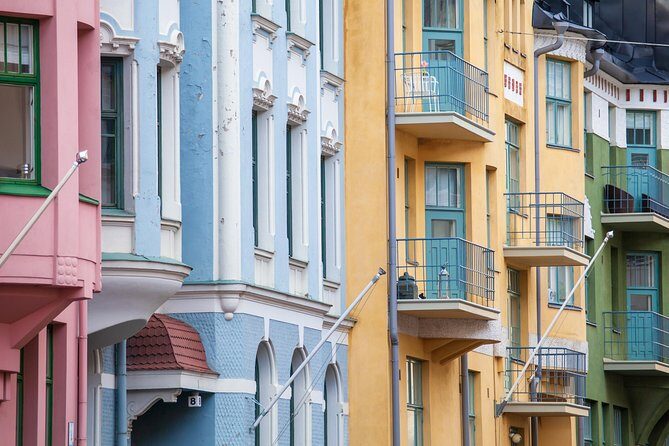
The walk begins at Art Museum Ateneum at Kaivokatu 2. Even if you’re not immediately going inside, just starting here helps you frame the day. Ateneum gives you a clear signal that this route is about more than landmarks—it’s about how Helsinki thinks about art.
This is also a smart meeting point because it anchors you in central Helsinki. From here, you can settle into the rhythm of the tour: short transit on foot, then a story at each stop. That structure is one reason the time feels efficient.
Havis Amanda and the 1908 mermaid: a fountain that turns heads

One stop is Havis Amanda, the playful fountain with a mermaid statue by sculptor Ville Vallgren, created in Paris in 1908. This is exactly the kind of photo moment that becomes more fun when you know the backstory.
What I like about this stop is the timing: you get a recognizable, visually satisfying landmark early enough that it wakes you up for the rest of the tour. It’s also a quick way to learn something about how Helsinki presents art in public space. The fountain isn’t just decoration—it’s part of the city’s visual identity.
Tip for photos: try different angles around the fountain. In a walking route like this, you don’t get unlimited time, so make your first set count.
A unique modern chapel: where the city mixes faith and form

Next comes a unique modern chapel. Then the route continues to a church built directly into its surrounding granite bedrock. Both are architectural “read it with your eyes” moments, not traditional museum moments.
Why this matters for you: architecture is often the first language a city uses to talk about values. Helsinki’s approach—especially when it merges design and environment—shows up in how people experience public space. These stops help you understand why art culture here isn’t only about galleries. It’s also about how buildings shape everyday life.
Practical consideration: since you’ll be outside for parts of the walk, bring layers. Helsinki can be chilly even when skies look calm, and you’ll enjoy the indoor moments more if you’re comfortable.




Alexis Kivi statue: a quick literary stop with a cultural point
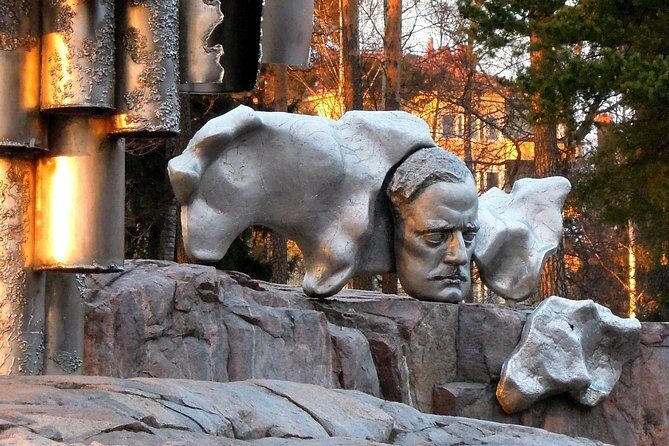
You also get to take a glance at the statue of Alexis Kivi, the author who wrote the first significant novel in the Finnish language. This isn’t a long museum detour—it’s a short cultural beat. But it’s a useful one.
In tours like this, a literary stop can do something architecture and fountains can’t: it grounds you in language and identity. If you want a deeper sense of Finnish culture beyond visuals, this is a small but meaningful moment.
Photo tip: plan for lighting. Outdoor statues can look great in shade or sun, but the contrast changes fast. If it’s overcast, you may get cleaner details without harsh glare.
The granite-bedrock church: why it feels different in person
The church built directly into granite bedrock is a standout stop on the route. The key is that you’re not just looking at a building; you’re looking at how the building sits in its natural material frame.
For me, the most valuable part of a stop like this is the guide’s interpretation—how modern design choices connect to place. Even if you don’t know the details ahead of time, the experience can still make sense because the setting does the work for you.
This is also a good pause if you’re traveling with someone who isn’t always a museum person. Architecture on a walk hits that sweet spot: it’s visually engaging and easier to process without needing reading time.
An art museum built as a tennis venue: old purpose, new meaning
One stop is an art museum built as a tennis venue. That kind of transformation is exactly why I think this route is worth doing.
It’s not just a clever fact. It’s a message about how cities adapt. Old structures can become new cultural spaces, and the guide’s commentary helps you notice that kind of continuity. You start seeing art culture as something built on reuse and reinvention, not only as new construction and big-name galleries.
What to watch for: even if you don’t enter the museum, you can still notice the logic of the space from the outside. And if you decide you do want to go in, remember the tour cost may not include that entry.
Amos Rex at the end: a subterranean futuristic exhibition space
The tour concludes at Amos Rex on Mannerheimintie 22-24. Amos Rex is the famous new subterranean futuristic exhibition space, which makes it a dramatic ending for an art-and-culture walk.
Ending underground feels like a reset button. After granite, fountains, and outdoor architecture, you finish somewhere that leans into modern showmanship and contemporary presentation. If you’re the type who loves how museums use light, scale, and surprise, this stop is likely to land well.
Also, this is a good moment to decide whether you want to stay longer. If the weather is still rough, Amos Rex can help you keep the culture momentum going without freezing outside.
The guide makes the route feel like a story (Anna’s style)
A lot of the appeal comes down to the guide. Anna, who has led this tour, stands out for city knowledge, Finland context, and keeping the tone easy—fun, not stuffy. That matters because art tours can become a blur of names and dates. Here, the guide’s job is to translate what you’re seeing into something you can actually remember.
There’s also a practical side that I really like: if it’s cold, the guide may tailor the experience to spend more time indoors. That flexibility can be the difference between a tour that feels pleasant and one that feels like a long walk in uncomfortable weather.
Possible hiccup: if you’re sensitive to low volume, note that one past experience flagged that the guide was soft spoken. If that might bother you, don’t be afraid to ask for a repeat or stand closer during key explanations.
Small-group pacing: how to make the most of 8 people max
With a maximum of 8 travelers, you get a better chance to actually engage. It also makes photo stops less chaotic. In a group this size, it’s easier for the guide to shift timing based on what catches people’s attention.
Here’s how to make it work for you:
- Keep your camera ready but don’t rush the first moments. The best stories come right as you arrive.
- If you have questions, ask them. The small group format is built for that.
- Wear shoes that handle cobblestones and uneven sidewalks, since the route is a walking experience.
Who should book this tour, and who might want something else
I think this tour is perfect if you:
- love art and culture and want context without spending hours planning
- enjoy a mix of architecture, public art, and contemporary discussion
- want a manageable length (about 1.5 hours) that still feels like a real outing
- are traveling with someone who might not want only museums, since the route includes several architectural and outdoor moments
You might consider another option if you:
- want a long museum-style experience with lots of time inside galleries
- expect the tour price to include all museum admissions (it may not)
- prefer extremely loud, nonstop lectures rather than conversational explanations
Should you book this Helsinki art-and-culture walk with a local?
Yes—if you want a smart, efficient way to understand Helsinki’s art scene and you like learning while you walk. The highlights are photo-friendly and thoughtfully varied, and the local commentary helps you connect contemporary creativity to the city you’re seeing.
Before you go, do two things: plan for possible museum entry costs if you decide to go inside, and dress for the weather so you can enjoy both outdoor stops and any indoor time the guide suggests. If you can do that, this is the kind of tour that leaves you with clearer memories, better photos, and an art-literate lens for the rest of your Helsinki days.
FAQ
FAQ
How long is the Helsinki art and culture tour?
It lasts about 1 hour 30 minutes.
What is the price per person?
The price is $129.00 per person.
Is the tour offered in English?
Yes, it is offered in English.
How many people are in the group?
The maximum group size is 8 travelers.
Where does the tour start and end?
It starts at Art Museum Ateneum, Kaivokatu 2, 00100 Helsinki, Finland, and ends at Amos Rex, Mannerheimintie 22-24, 00100 Helsinki, Finland.
What is included in the tour price?
The tour includes a local guide who wants to show you his city.
What is not included?
Personal expenses and food, drinks, or snacks are not included. Museum entry is not included as part of the tour cost.
Is it accessible and close to public transportation?
Service animals are allowed. It is near public transportation, and most travelers can participate.