REVIEW · HELSINKI
Helsinki architecture tour with a city planner
Book on Viator →Operated by Ataman Tours · Bookable on Viator
Helsinki feels designed, not just built. This guided architecture walk is led by a city planner, so you don’t just spot pretty buildings—you learn how decisions shape the city, starting around Senate Square.
I especially like the small group size and the chance to ask direct questions as you go, not after the fact. The guide, Emek, links architectural choices to wider social and political forces, with a style that’s both organized and easy to follow.
One thing to consider: it’s about a 3-hour walk, and the stops are timed, so you’ll want comfortable shoes and the mindset to keep moving at a friendly pace.
In This Review
- Key highlights worth showing up for
- Helsinki architecture through a planner’s eyes (not a postcard’s)
- From Aleksanterinkatu 9 to Oodi: the route you end up remembering
- Senate Square: the planning mindset begins with the civic core
- National Library of Finland: public learning as a city priority
- Jugendsali: when architecture connects to public life
- Pohjola Insurance Building: architecture meets institutions and power
- Esplanadi Park and Academic Bookstore: the human pace between landmarks
- Helsinki Central Railway Station: where the city introduces itself
- Oodi Central Library: finishing at a modern statement
- Emek and the way the tour makes architecture feel personal
- Timing, pacing, and what to bring for a 3-hour walking tour
- Price and value: what you’re really paying for
- Who should book this tour, and who might prefer something else
- Should you book this Helsinki architecture planner tour?
- FAQ
- What is the duration of the Helsinki architecture tour?
- How much does the tour cost?
- Where does the tour start?
- Where does the tour end?
- How large is the group?
- What is included in the price?
- Are food and drinks included?
- Is transportation to the stops included?
- Is the tour admission free at the stops?
- What is the cancellation policy?
Key highlights worth showing up for

- City planner perspective that turns architecture into “how the city works”
- Emek’s storytelling connects buildings to society and politics
- Timed, walkable route built around major landmarks and quieter stops
- Question time on the move, so you can follow your interests
- Small group (max 6) for a more personal feel
Helsinki architecture through a planner’s eyes (not a postcard’s)
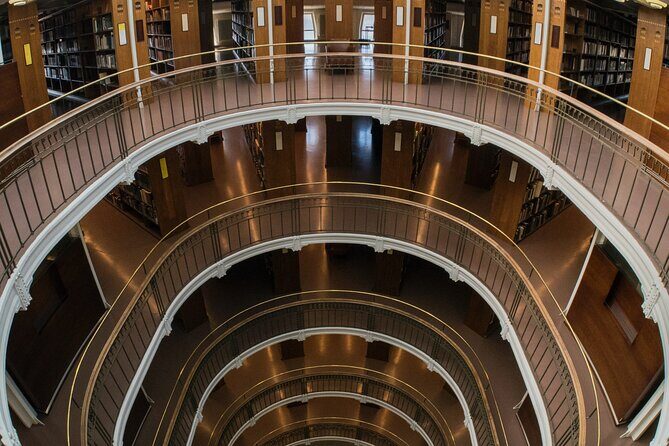
If you’ve ever looked at a city and wondered who decided what goes where, this tour is for you. Helsinki is full of impressive architecture, sure—but what makes it click is the planning logic behind it. A city planner guide doesn’t let you stay at the surface. You start asking better questions: Why here? Why this style? What did the city prioritize at the time?
I also like that this isn’t a long, museum-heavy day. It’s a walking route that keeps you oriented. You move through the city in a way that helps you map it mentally. That matters in Helsinki, where neighborhoods and landmarks can feel calmer than the “big-city rush,” but the design choices are still serious.
The group stays small—up to 6 travelers—which changes the vibe. You’re less likely to get lost in a loud shuffle, and it’s easier for the guide to read the room. That means if you’re the kind of traveler who likes follow-up questions, this tour gives you a good lane to do that.
And yes, you do cover a fair amount in a short time. It’s not a slow stroll where you linger everywhere. But the pace is still “comfortable active,” not exhausting—especially if you dress for the weather and plan on short stops.
You can also read our reviews of more city tours in Helsinki



From Aleksanterinkatu 9 to Oodi: the route you end up remembering
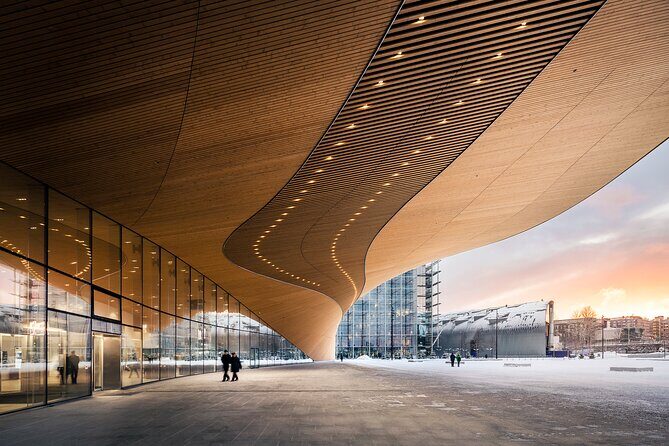
You start at Aleksanterinkatu 9, 00100 Helsinki. You’ll end at Helsinki Central Library Oodi, Töölönlahdenkatu 4, 00100 Helsinki. That matters because you finish at one of the city’s most talked-about modern landmarks, so the tour naturally lands on something you can keep thinking about afterward.
The tour is also designed around efficient movement. It’s described as near public transportation, so if you’re piecing together your day in Helsinki, you’re not stuck on a far-off dock. You can also get a mobile ticket for the experience, which is handy if you’re juggling your phone battery and multiple bookings.
One practical tip: since the tour is outdoors and runs in all weather, you’ll feel smarter bringing a layer you can tolerate for 3 hours. Helsinki weather can change its mind fast, and you’ll be outdoors between stops.
Senate Square: the planning mindset begins with the civic core
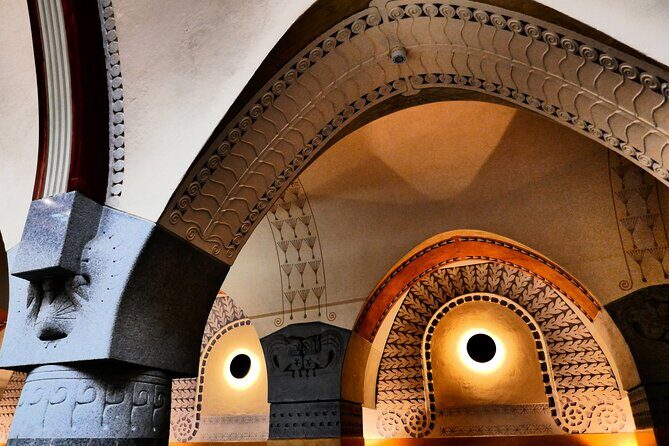
The tour’s first stop is Senate Square, and you’ll have about 10 minutes there. That’s a short window, but it’s also a strong move. Starting at a civic focal point helps you get the “why this area” framework early, before the route starts threading through institutions, business, parks, and major public spaces.
What makes Senate Square a good launch pad is the feeling of order. Even if you don’t know architecture terms, the layout helps you understand how the city organizes its public life. A city planner guide uses that moment to set expectations: you’re going to look at buildings as part of a system, not isolated objects.
If you’re the type who likes photos, do a quick pass for the classic angles first, then listen for the planning story. In 10 minutes, you can still get both—but you’ll have to be efficient.
National Library of Finland: public learning as a city priority
Next up is the National Library of Finland for about 15 minutes, with free admission noted for the stop. Libraries are one of the easiest ways to read a city’s values, because they’re long-term investments. Even without going deep into trivia, you can tell this kind of building is meant to serve the public.
This stop works well on an architecture tour because it sits at the intersection of design and daily culture. A planner guide can point out how a major public institution fits into its surroundings—what it signals, who it serves, and how it shapes the flow of people in the area.
The drawback here is time. At 15 minutes, you won’t be doing a slow, solo museum-style visit. You’ll get highlights and explanations, then move on. If you’re hoping for an unhurried wander inside, plan a separate revisit later.
Jugendsali: when architecture connects to public life
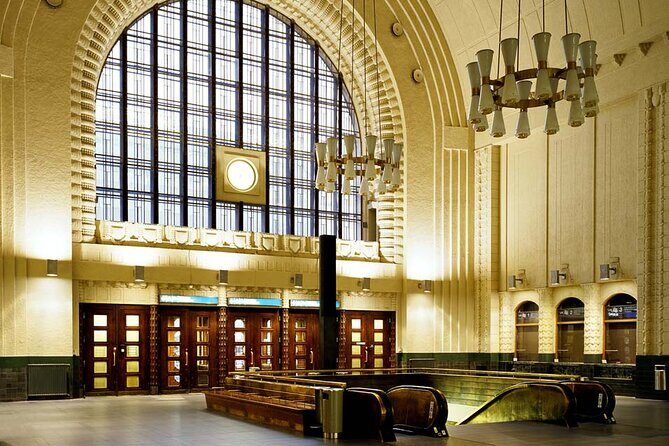
You’ll stop at Jugendsali for about 15 minutes, again with free admission listed. The name alone hints at a design story tied to a specific era, and the guide’s job here is to help you see what that means in real-world terms.
What I like about including a stop like this is balance. You get more than just the headline monuments. You also get a chance to understand how different architectural movements show up in everyday Helsinki, not only in the most obvious places.
Keep your expectations realistic: this is a walking-tour stop, not a deep architectural lecture. Use the time to watch how the building’s presence affects the street scene—then ask the guide what to compare it to later.





Pohjola Insurance Building: architecture meets institutions and power
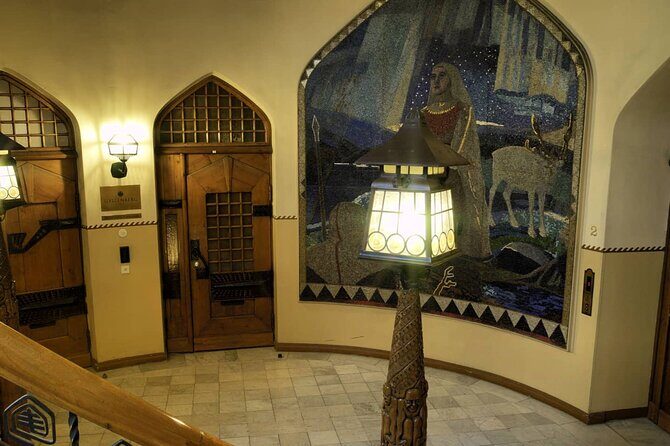
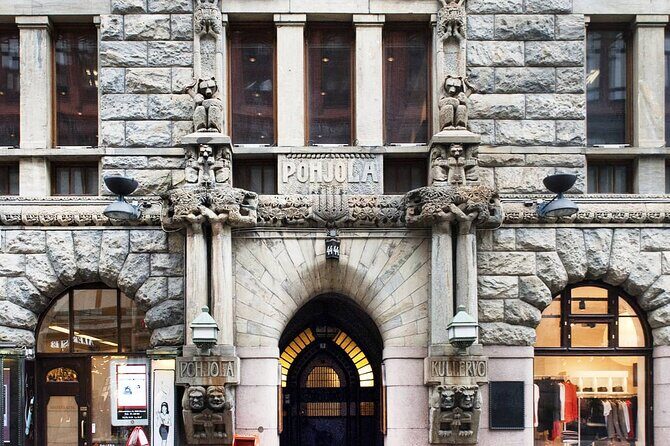
The tour includes Pohjola Insurance Building for about 10 minutes, with free admission noted. Insurance companies and other financial institutions have historically been major patrons of architecture. That makes them useful landmarks on a planning-focused walk.
A planner guide can help you see the building as more than a facade. It’s part of how a city organizes work, credibility, and public presence. Even if you’re not a design nerd, this kind of stop helps you connect architecture to economic and civic history.
Ten minutes sounds quick because it is quick—but it’s also enough time to get the guiding ideas. If you take a few notes, you’ll be surprised how much you can recall later when you notice similar design choices around the city.
Esplanadi Park and Academic Bookstore: the human pace between landmarks
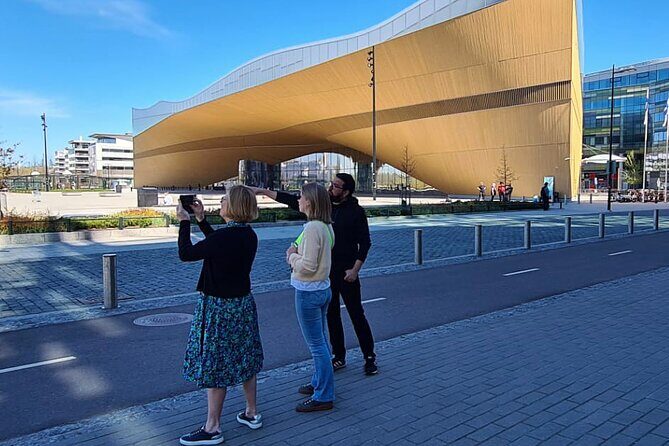
Two of the most pleasant stops come next: Esplanadi Park (about 10 minutes) and Academic Bookstore (Akateeminen Kirjakauppa) (about 10 minutes), both with free admission listed.
Parks matter on architecture tours because they’re a built environment too—just not in the same way as buildings. They show how public space is shaped for walking, gathering, and breathing room. Even a short stop helps reset your senses after heavier institutional architecture.
Then you hit the bookstore. A bookstore stop on an architecture walk might seem odd at first, but it fits the bigger theme: cities are made of places that support culture and daily life. Bookstores also tend to reveal how people interact with knowledge, community, and local identity—things planners care about, even when they’re talking about roads and form.
In these shorter stops, I suggest doing two things fast: take one photo you’ll actually use later, then ask one question. With timed segments, your attention is your best tool.
Helsinki Central Railway Station: where the city introduces itself

After the quieter cultural beats, the tour turns to a major transport icon: Helsinki Central Railway Station for about 10 minutes (free admission listed for the stop). Stations are a gift to a planner guide because they’re an urban machine. They pull together people, schedules, movement patterns, and city identity.
This stop helps you understand how Helsinki handles arrival and departure spaces. Even in a quick stop, your guide can help you read the station as a civic gateway rather than only a transit hub.
Photo tip: grab wide shots early, then stand slightly to the side if you can. It’s easier to watch the “flow” of the space when you’re not right in the main pedestrian stream.
Oodi Central Library: finishing at a modern statement
The last stop is the Central Library Oodi, with about 20 minutes on the clock and free admission noted. Getting the most time at the end is smart. By the time you reach Oodi, you’ve already learned how to look—so you can better compare older civic spaces to newer design priorities.
A library is a perfect capstone for a tour like this. You can see how a city keeps reinventing public learning, community gathering, and how spaces invite people in. A planner guide’s storytelling tends to land best here because the route has already given you the contrast.
Use the extra minutes to slow down slightly. Do a second look at the details and ask any final question you held back earlier. This is the time to connect the dots you’re carrying from Senate Square onward.
Emek and the way the tour makes architecture feel personal
The standout feature here is the guide’s style. The guide is Emek, and the tour is clearly designed around his ability to explain architecture through the lens of society and politics. That’s a big deal, because it turns “I saw a cool building” into “I understand why the city built it that way.”
What I liked in the feedback pattern is the consistency: people repeatedly point to how well he connected history with architecture and kept the group engaged. There’s also a theme of humor and warmth. That matters more than you’d think, because architecture tours can become heavy if the guide only recites facts. Here, the tone stays approachable.
Most importantly, there’s time to ask questions. A planner’s questions are also different from a typical sightseeing guide’s. Expect prompts that help you think like a designer: what problem is the building solving, what audience is it shaping, and what does it communicate to the city?
Small group size helps this. With max 6 travelers, you’re less likely to get brushed off when you want to clarify something.
Timing, pacing, and what to bring for a 3-hour walking tour
The tour runs about 3 hours and includes a sequence of short stops ranging around 10 to 20 minutes each. That structure is great for getting an overview fast. It’s also a signal: this is a “learn while moving” experience.
So what should you bring?
- Comfortable walking shoes (you’ll be on foot the whole way)
- A light layer and rain protection since it operates in all weather
- A charged phone for your mobile ticket
- A note app (or two) so key names and ideas don’t slip away
Because the stops are brief, it helps to prepare mentally. Don’t plan to do deep reading at every location. Plan to listen, compare, and then revisit later if something genuinely grabs you.
Price and value: what you’re really paying for
The price is $69.14 per person. At first glance, that sounds like a premium compared with self-guided walking. But you’re not paying for access. You’re paying for interpretation.
The tour includes a local guide, and the stops are listed with free admission. That’s part of the value equation: you’re not stacking entrance fees on top of the tour cost. Plus, the experience is described as having group discounts, and you’ll get a mobile ticket, which makes the whole thing simpler to manage.
What’s not included is also important. You’re on your own for food and drinks, and there’s no transportation to/from attractions included. That doesn’t make the tour bad value—it just means you should plan your day like this is a guided walking block in the middle.
If you want the fastest way to understand Helsinki’s architecture without turning your trip into an endless schedule of solo research, this price can be reasonable. The guide’s planning perspective is what you’re buying.
Who should book this tour, and who might prefer something else
This is a good match if you care about culture and history, like to ask questions, and you enjoy the logic behind what you see. The route also favors reasonably active walkers. If you can handle 3 hours on foot at a steady pace, you’ll be fine.
You might skip or choose a different style of tour if you prefer a slower pace or want long, inside-the-building time at each stop. Timed stops are the whole structure here. You’ll get highlights and explanations, not a full wandering session in every location.
Should you book this Helsinki architecture planner tour?
If you want to understand Helsinki instead of just photograph it, I think this tour is worth serious consideration. The combination of a city planner perspective, a guide like Emek, and a route that links civic core to modern public space makes the experience feel more meaningful than a typical landmark hop.
Book it if:
- You like architecture explained through real-world context
- You want to ask questions and hear answers immediately
- You’re happy with a timed walking pace
Skip it if:
- You want long stops and lots of unscripted time inside buildings
- You’d rather spend the day fully self-paced with minimal walking
FAQ
What is the duration of the Helsinki architecture tour?
The tour lasts about 3 hours.
How much does the tour cost?
The price is $69.14 per person.
Where does the tour start?
The tour starts at Aleksanterinkatu 9, 00100 Helsinki, Finland.
Where does the tour end?
The tour ends at Helsinki Central Library Oodi, Töölönlahdenkatu 4, 00100 Helsinki, Finland.
How large is the group?
The tour has a maximum of 6 travelers.
What is included in the price?
A local guide is included.
Are food and drinks included?
No. Food and drinks are not included.
Is transportation to the stops included?
No. Transportation to/from attractions is not included.
Is the tour admission free at the stops?
The stops listed are marked with free admission tickets.
What is the cancellation policy?
You can cancel for a full refund up to 24 hours in advance of the experience start time.