REVIEW · ROVANIEMI
Rovaniemi: Snowshoe Wilderness Adventure
Book on GetYourGuide →Operated by Beyond Arctic · Bookable on GetYourGuide
A winter walk through the Arctic feels different. This snowshoe adventure in Rovaniemi mixes deep-snow hiking with practical photography coaching, plus a cozy break in a teepee by a campfire.
Two things I especially like: you get proper snowshoe gear made for deep snow, and you also get real photo guidance from a professional photographer, not just a stroll. One thing to consider is that it’s photography-focused and fairly demanding, so it’s best for people age 10+ who are comfortable walking in winter conditions.
You’ll start with a small-group setup (up to 8), get picked up from your accommodation, and ride by minivan out into the woods where the scenery looks untouched. If the weather cooperates, you’ll get great chances for Arctic forest photos, and wildlife is possible. The only drawback: it’s a 3-hour format, so you’re hiking long enough to feel it, but you won’t have an all-day, slow-and-savor pace.
In This Review
- Key Highlights You’ll Actually Care About
- How Snowshoeing + Photography Works in Arctic Lapland
- From Your Door in Rovaniemi to a Hidden Spot in the Woods
- Your Snowshoe Setup: Gear That Fits Deep Snow
- The Main Hike: Kilometers in Arctic Forest, Not a Quick Stroll
- Teepee Break and Campfire Snacks: The Cozy Part That Improves Photos
- A Photographer Guide Who Teaches You How to See
- The Edited Photo Download: Proof You Were There
- Weather, Cold, and What You Should Plan For
- Price vs. What You Actually Get at $119
- Who This Snowshoe Wilderness Adventure Fits Best
- Should You Book This Rovaniemi Snowshoe Tour?
- FAQ
- Where does the tour pick up in Rovaniemi?
- How long is the snowshoe wilderness adventure?
- What’s included with the snowshoeing gear?
- Will I be provided with warm clothing and winter boots?
- What language is the guide?
- Is there a minimum age?
- Do I get photos after the tour?
Key Highlights You’ll Actually Care About
- Small group size (max 8) keeps the pace flexible and the photo coaching personal
- Snowshoes + poles are provided and built for deep-snow hiking
- Professional photographer guidance for landscape and nature shots
- Teepee break + campfire snacks help you warm up and reset
- Edited photo download is provided afterward with a guide password
- Punctual pickup and smooth minivan logistics reduce winter stress
How Snowshoeing + Photography Works in Arctic Lapland
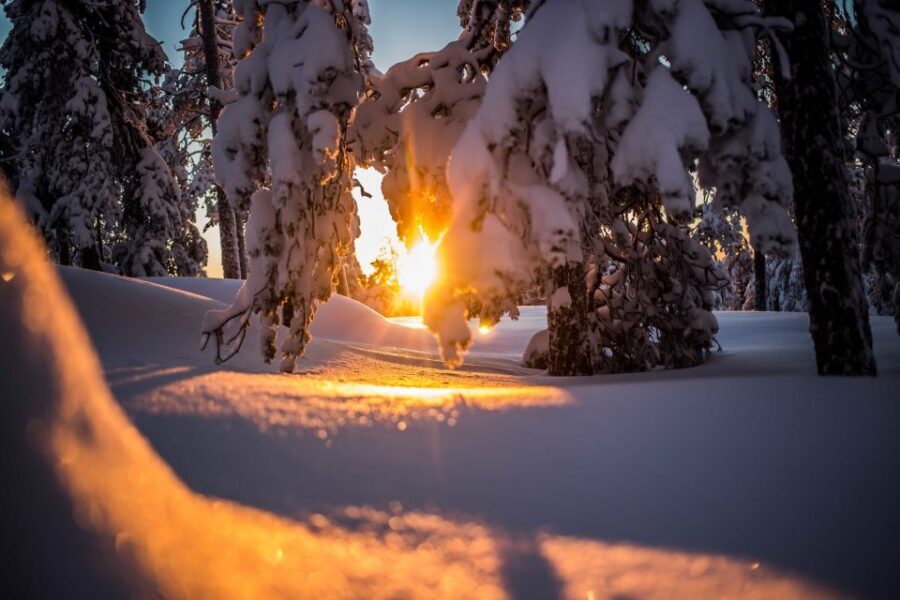
There’s a reason snowshoeing is still popular in northern winters. On foot, deep snow can stop you. With the right snowshoes, you float across it, and you gain access to quiet trails where the forest feels private and real. This is one of the best ways to move through Lapland when roads and sidewalks become less interesting than the surrounding wilderness.
What makes this tour stand out for me is the blend of movement and photography. You’re not just given a warm drink and told to look around. You hike a few kilometers through the Arctic forest, then you stop, settle, and photograph from a more stable setup—especially around the campfire moments. That matters because winter light changes fast, and you want to learn how to see it while you’re there.
The tour is also built for people who want photos, even if you don’t consider yourself a “serious photographer.” The guide teaches tricks and techniques you can reuse later—how to frame snowy trees, how to think about contrast, and how to photograph nature without fighting the cold.
A few more Rovaniemi tours and experiences worth a look
From Your Door in Rovaniemi to a Hidden Spot in the Woods
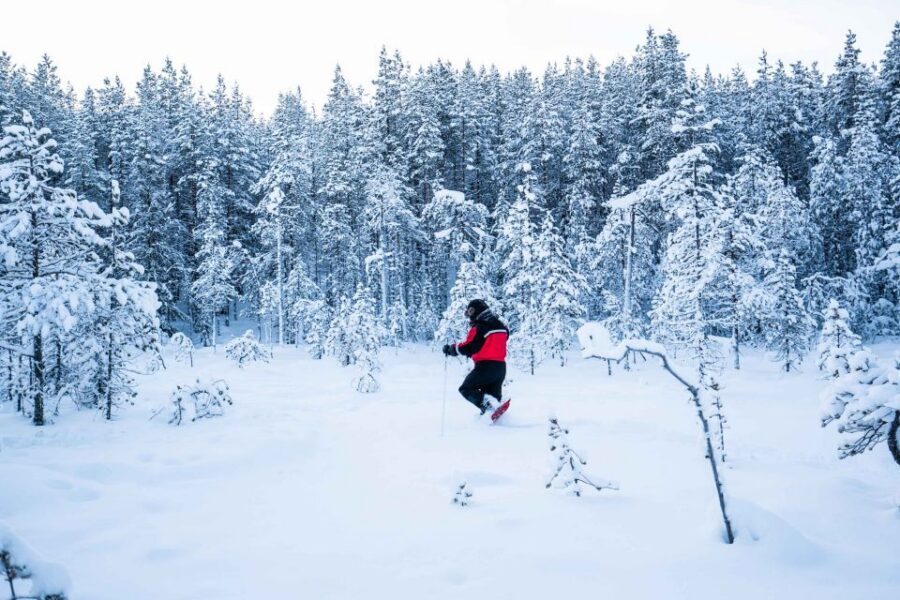
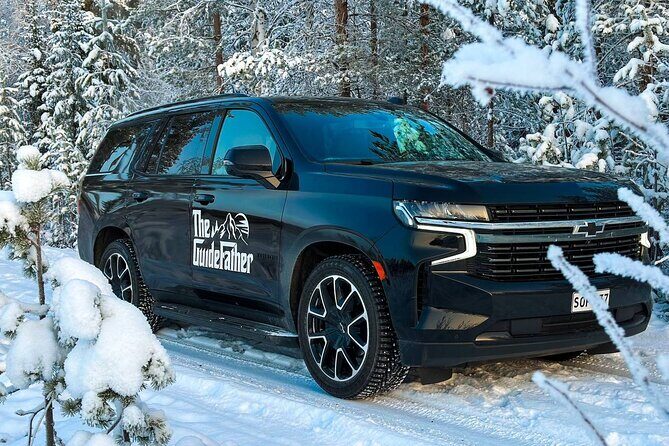
Most Rovaniemi activities start in town and head outward. This one does the same, but the logistics are simple. You’re picked up at your accommodation within 10 kilometers of the Beyond Arctic office on Valtakatu 21 (96200 Rovaniemi). If you’re staying closer to the city center, you typically meet at the Beyond Arctic Office about 15 minutes before the starting time.
Then it’s minivan time. You’ll ride from Rovaniemi to a location hidden in the woods, away from the main roads. That short travel matters because you lose less daylight to driving and you arrive with the chance to photograph while conditions are good.
One small but real comfort detail: you’re told where to wait (hotel lobby) so you aren’t guessing in winter dark. In reviews, punctual pickup came up more than once. When it’s cold outside, being ready on time is half the battle.
Your Snowshoe Setup: Gear That Fits Deep Snow
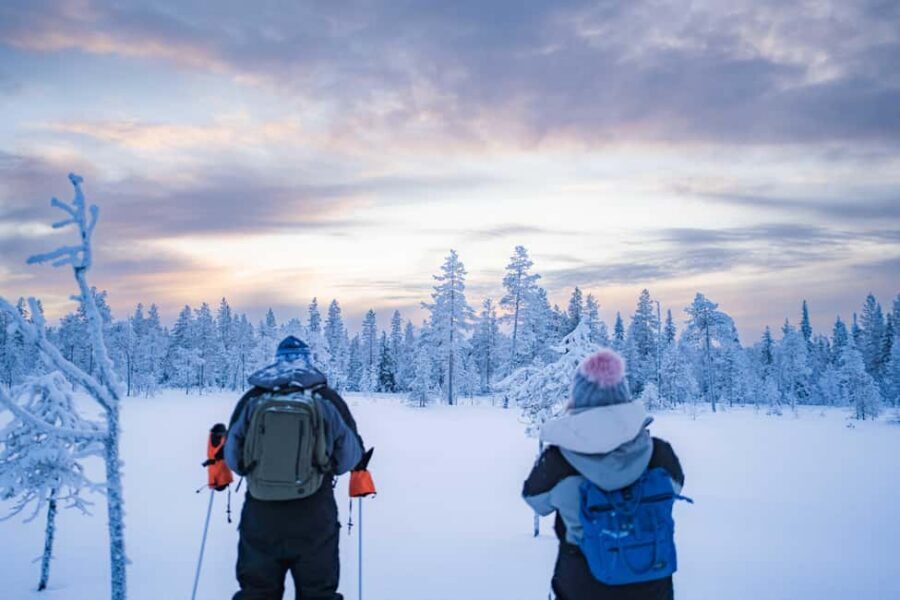
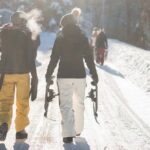
Before you head out, you get high-quality snowshoes and poles. The tour notes that the snowshoes are made specifically for deep-snow hiking. That’s not a throwaway line. Deep snow changes everything—how your weight transfers, how your stride lands, and how quickly you fatigue.
If you’ve never worn snowshoes before, this is exactly the kind of activity where having the right gear makes a difference right away. And if you need winter layers, you’re also provided warm clothing and winter boots if required. In one write-up, people specifically mentioned the option to borrow overalls and winter boots, which is a huge help if you packed light.
Because the tour is photography-based and quite demanding (minimum age is 10), I’d plan for a workout. You’ll hike through snow, and you’ll do it at a winter pace with short breaks that let you warm up and reset your camera setup.
The Main Hike: Kilometers in Arctic Forest, Not a Quick Stroll
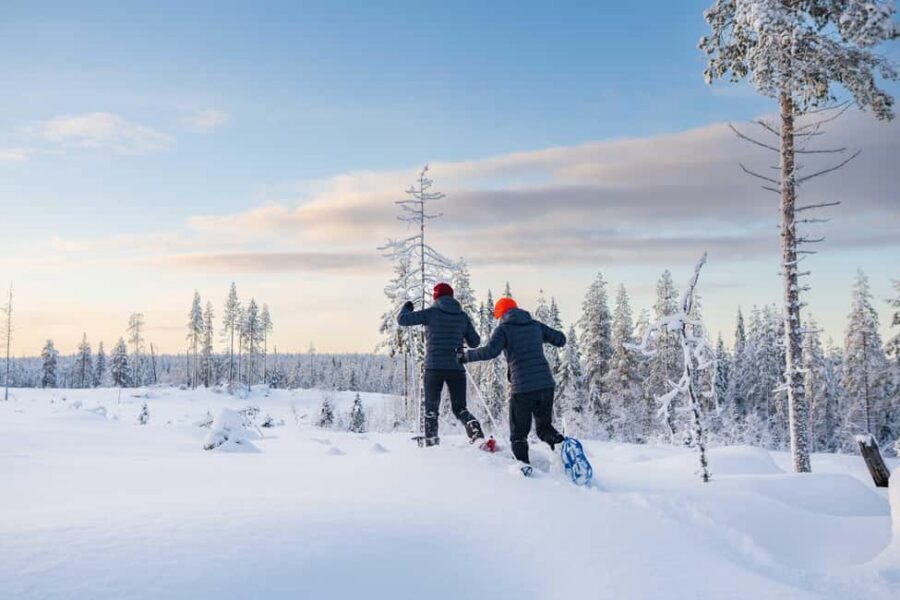
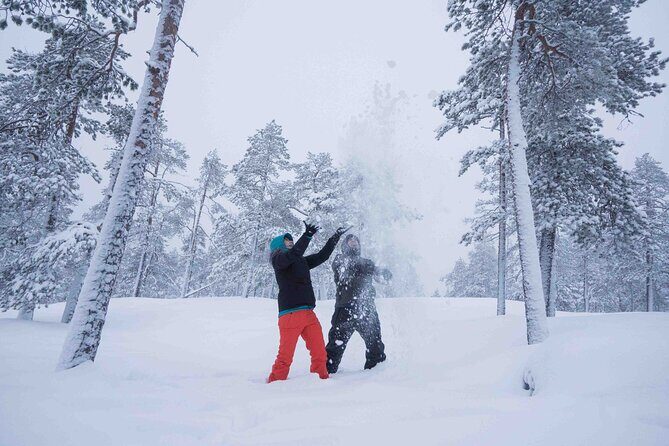
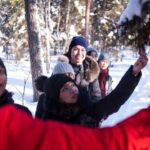
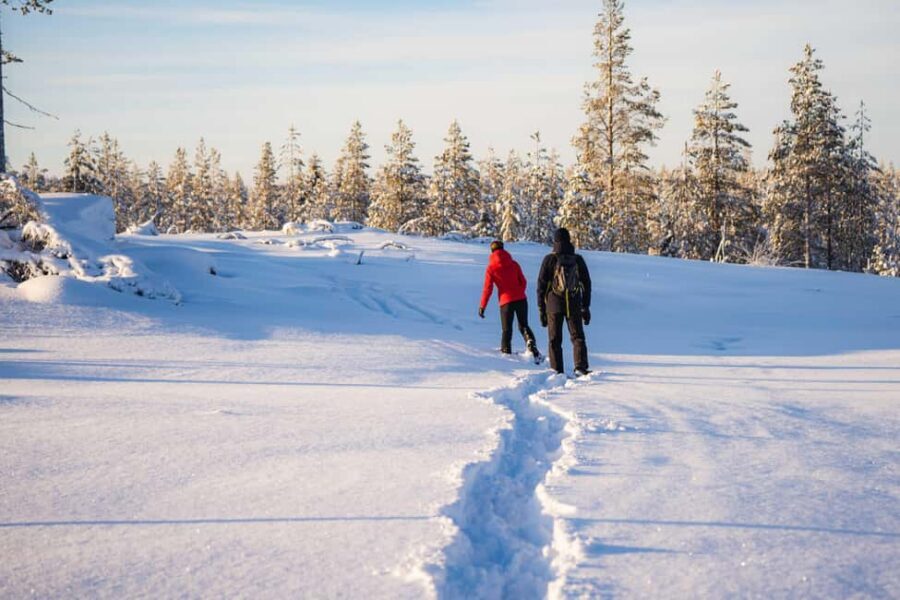
Once you’re suited up, you hike for a few kilometers in the wilderness. The goal isn’t to rush to a viewpoint and move on. The goal is to let you experience how the Arctic forest looks and feels while you learn how to photograph it.
Snowshoeing is one of the best ways to move through deep snow, and the tour also connects it to long winter traditions—snowshoes date back at least 3,500 years. That bit of context matters because it frames snowshoeing as practical winter travel, not just a modern activity.
On the trail, I’d expect:
- Changing visual textures as you move from open snow to denser tree cover
- Moments where the path disappears under snow, so watching foot placement is part of the experience
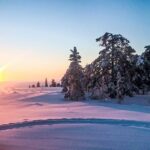
- Plenty of photo opportunities, especially where forest lines or tree clusters create depth
There’s also a chance of wildlife. The tour doesn’t guarantee sightings, but it’s realistic enough that your guide will likely keep an eye out. When wildlife appears, you’ll get more value out of the moment if you already know how to frame quickly in cold and low light.
Teepee Break and Campfire Snacks: The Cozy Part That Improves Photos
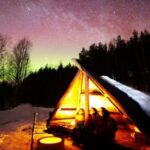
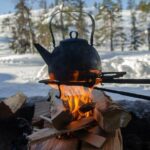
The campsite stop is where the tour becomes more than hiking. You’ll take a break in a teepee, build a campfire, and spend time with camp activities. The schedule suggests around two hours at the campsite, which is long enough to slow down and actually enjoy the setting.
This is also where photography benefits. A campfire gives you warm light against cold surroundings, and a teepee offers structure in your frame—something you can use for foreground interest. Instead of only shooting snowy trees, you can capture the mood of winter.
You’ll enjoy snacks and hot drinks during the break. In reviews, people mentioned a Kota setting with delicious hot blueberry juice, which tells me this part isn’t a bland wait-around—it’s a real winter refresh. You can also take the time to practice what the guide teaches while you’re stationary, instead of doing everything at once on the move.
A Photographer Guide Who Teaches You How to See
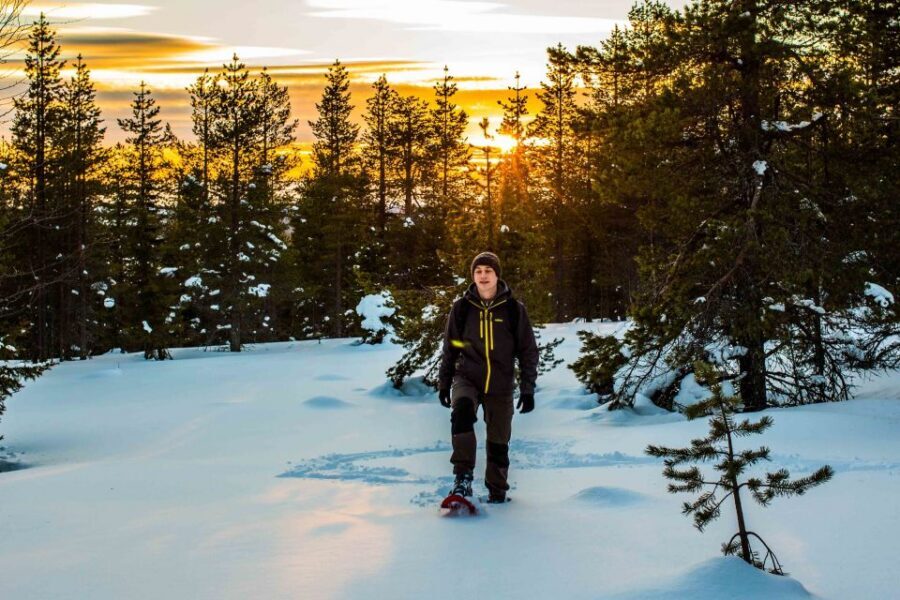
The biggest value for me is that the hike is guided by a professional photographer. That means the teaching is tied directly to what you’re seeing right then, not generic camera lectures.
The guide will share photography tips and tricks for your own landscape and nature photography. The tour’s focus is on Arctic nature, so you’ll likely spend time thinking about things like:
- Composition in snowy scenes (where everything is bright and contrast can be tricky)
- How to handle winter lighting when it’s not the same as summer sun
- How to photograph forest depth and subject separation in flat winter colors
Because it’s a small group (up to 8), the guide can adapt to the group’s skill level and energy. Reviews mentioned that guides answered questions and adjusted the tour individually. That’s important. In winter, one person moving fast can throw off the whole pace, so individual adjustment helps everyone keep moving—and keep shooting.
Guides mentioned in reviews include Emilia and Ville. When the guide is taking photos, showing you how they frame, and then helping you recreate that approach, you learn faster than you would with a generic tips list.
The Edited Photo Download: Proof You Were There
One of the smartest inclusions is the edited photo collection available for download after the tour. You’ll receive a password from your guide, and the photos are collected at gallery.beyondarctic.com.
Why this matters for value: winter photography often produces shots that look fine on the camera but feel underwhelming once you check them later. The editing step saves time and improves results, especially with snow, dark forests, and changing winter light.
It also means you’re not only dependent on your own camera settings. You get a set of polished images that reflect the tour’s best angles and moments, which is great for:
- Social sharing with fewer disappointments
- Creating a winter memory archive
- Using the images as a reference for how the scene should look
In reviews, people said they received great photos by email shortly after the tour. Even without a guarantee, the structure is clear: the photos are part of the package, not a separate upsell.
Weather, Cold, and What You Should Plan For
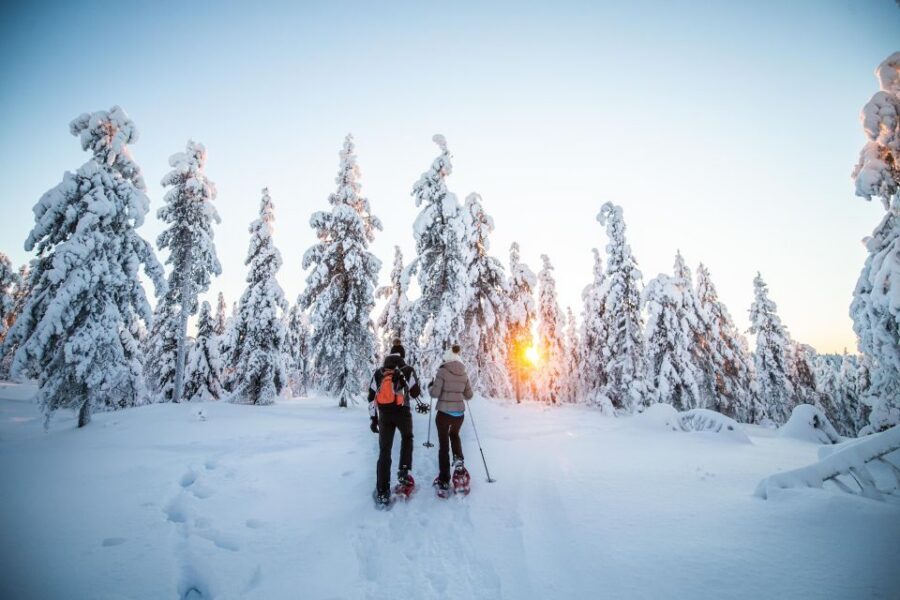
Arctic weather can’t be controlled. What you can do is show up ready.
This tour provides warm clothing and winter boots if required, which lowers the risk of having a miserable experience because you’re underdressed. Still, I’d treat winter hiking as a “dress correctly” situation, not a casual stroll. Your legs and fingers will feel the cold if your layers aren’t doing their job.
If you’re lucky, you might encounter wildlife. If not, the forest still delivers photo-worthy texture—snow on branches, soft silhouettes, and quiet pathways. When conditions are good, the difference between a decent photo and a strong one is often timing and framing. That’s exactly where a photography guide helps.
Also, note the minimum age is 10 because the tour is photography based and quite demanding. If you’re bringing kids, this is the one tour I’d be careful with. Snowwalking takes effort, and the photo focus means you’ll pause and adjust, not just walk steadily for the entire time.
Price vs. What You Actually Get at $119
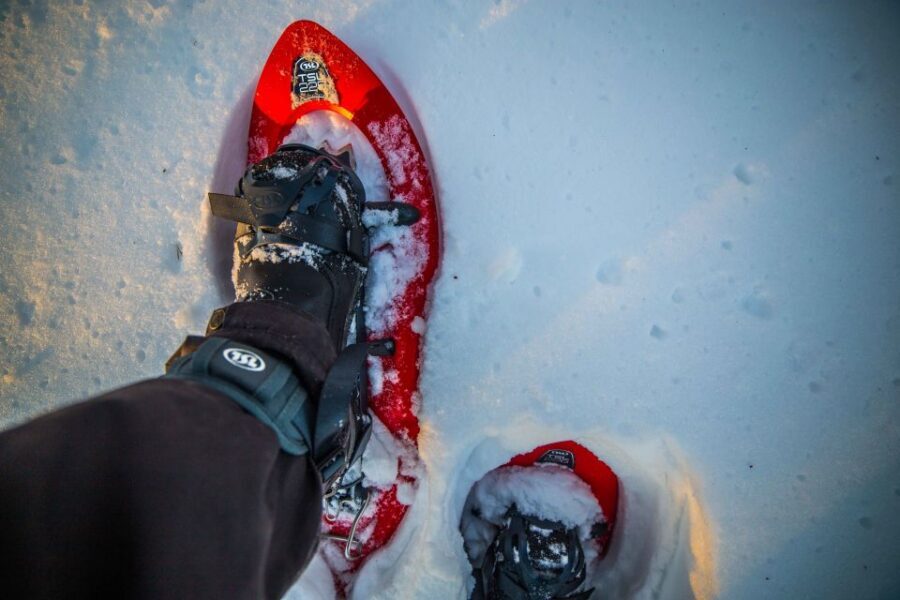
At $119 per person for about 3 hours, this isn’t a budget “walk in the snow” activity. You’re paying for multiple pieces that are hard to DIY in Lapland:
- Transport: minivan pickup and drop-off from your accommodation
- Proper gear: snowshoes and poles made for deep snow
- Guidance: a professional photographer leading and teaching techniques
- Warmth and fuel: hot drinks, snacks, and time around a campfire
- A real souvenir: an edited photo collection with download access
When you add all that together, the price starts making sense. You’re basically buying a curated winter experience that includes equipment, coaching, and post-tour photo deliverables. If you were to try to reproduce it on your own, you’d either spend time figuring out routes and gear or you’d miss the teaching and the photo post-processing.
Small group limits also matter. Up to 8 participants means the guide can manage pacing and answer questions. That’s one reason this kind of tour feels smoother than larger group formats.
Who This Snowshoe Wilderness Adventure Fits Best
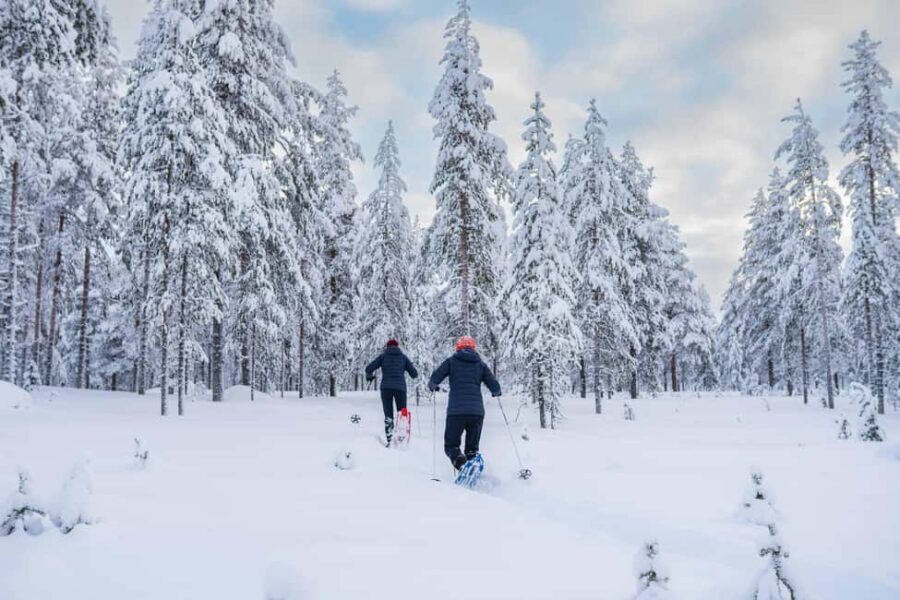
This is a strong match if:
- You want a real workout in snow, not just a brief photo stop
- You care about photography enough to learn a few practical techniques
- You like small-group tours where questions and pacing aren’t an afterthought
- You want both motion and comfort: hiking plus a teepee and campfire break
It’s less ideal if you want a totally easy winter experience or if your group includes children under 10. The minimum age rule is there for a reason: the tour’s photography focus and deep-snow demands make it tough for younger kids.
If you’re traveling solo, you’ll want to check single booking availability, since the guidance notes that single booking can be arranged via the activity provider.
Should You Book This Rovaniemi Snowshoe Tour?
I’d book it if you want a winter story you can actually see in your photos afterward. The mix of deep-snow hiking, a teepee-and-campfire break, and a professional photographer guiding your shooting is the kind of combo that’s hard to replicate.
Also, it’s a smart choice in Lapland if you don’t want to spend all your time chasing one big attraction. This tour gives you something more personal: forest textures, quiet wilderness light, and lessons you can use for future nature photos.
If you’re unsure, ask yourself one question: do you want more than a scenic walk? If yes, this is a solid pick.
FAQ
Where does the tour pick up in Rovaniemi?
Pickup is included at your accommodation within 10 kilometers of the Beyond Arctic office (Valtakatu 21, 96200 Rovaniemi). If you’re in the city center area, the meeting point is the Beyond Arctic Office, and you wait about 15 minutes before the starting time.
How long is the snowshoe wilderness adventure?
The duration is 3 hours. Starting times vary, so you need to check availability.
What’s included with the snowshoeing gear?
You receive snowshoes and poles for the hike.
Will I be provided with warm clothing and winter boots?
Warm clothing and winter boots are provided if required.
What language is the guide?
The live tour guide is in English.
Is there a minimum age?
Yes. The minimum age is 10 years old, and the tour is not suitable for children under 10.
Do I get photos after the tour?
Yes. You can access a collection of edited photos available for download after the tour at gallery.beyondarctic.com. Your guide provides a password to access the collection.