REVIEW · ROVANIEMI
Daytime Ice Floating Rovaniemi, Frozen Lake Experience
Book on GetYourGuide →Operated by Nordic Adventures · Bookable on GetYourGuide
Floating on a frozen lake sounds unreal. In Rovaniemi, you’ll suit up in thermal rescue flotation gear and glide in an icy lake while Lapland’s winter air does the rest. I love the no-special-skills approach and how the guide makes entry feel manageable, even if you’re nervous. One drawback to plan around: in late October and November, snow and lake ice can’t be guaranteed because it depends on natural conditions.
You’ll spend about 3 hours total, with hotel pickup and drop-off included, then settle into a relaxed rhythm: suit up, safety briefing, time in the water, and a warm-up break by an open fire. Expect a small group feel, plus hot drinks and cookies in a cozy cottage when your fingers and toes ask for mercy.
This is the kind of activity that stays with you because it blends two extremes—cold water and warm comfort—without making it complicated. You’ll get an experience that feels almost cinematic, but the rules are practical and clear, and the whole thing is designed around staying safe.
In This Review
- Key things I’d zero in on first
- Ice floating in Rovaniemi: what you’re actually doing on the lake
- Thermal rescue suits: the secret sauce (and how to dress for them)
- Adults-only, small group pacing, and what it feels like in the water
- From pickup to lakeside: how the 3 hours tends to flow
- The warm-up moment: open fire, cookies, and hot drinks that actually matter
- Safety in real cold: entry, floating, and what you should know before you go
- Price and value: is $134 worth it for a 3-hour Lapland memory?
- Practical tips: socks, cameras, and how to plan for photos
- Who should book this ice floating experience (and who shouldn’t)
- Should you book ice floating in Rovaniemi?
- FAQ
- How long is the ice floating experience in Rovaniemi?
- Is it really suitable if I’m not a strong swimmer?
- What ages and heights are allowed?
- Are snow and ice guaranteed on the lake?
- What’s included in the price?
- How does pickup work?
- What should I bring?
- Is this experience accessible for everyone?
Key things I’d zero in on first
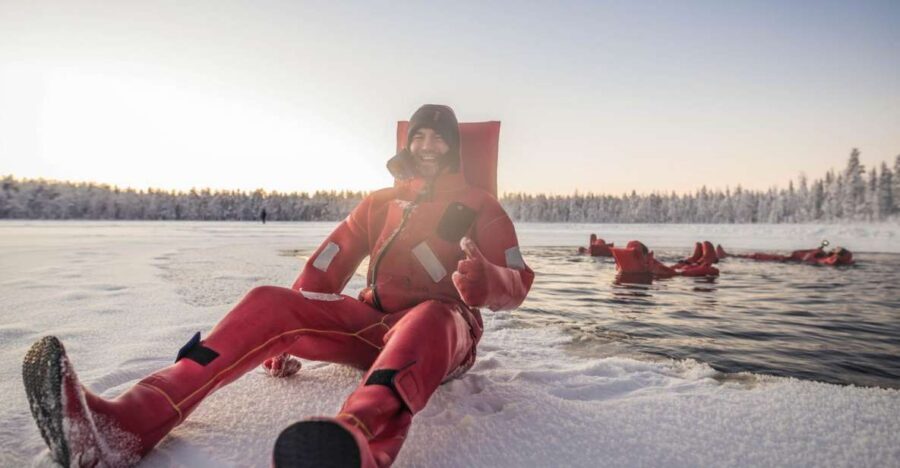
- Thermal rescue flotation suits keep you warm and buoyant, so you can focus on the view
- Small group, adults-only pacing means more hands-on help during entry and exit
- No special skills required for floating, and knowing how to swim is helpful but not required
- Open fire + hot drinks and cookies give you a real warm break, not just a quick stop
- Guide-led safety with professional, English-speaking instruction throughout
Ice floating in Rovaniemi: what you’re actually doing on the lake
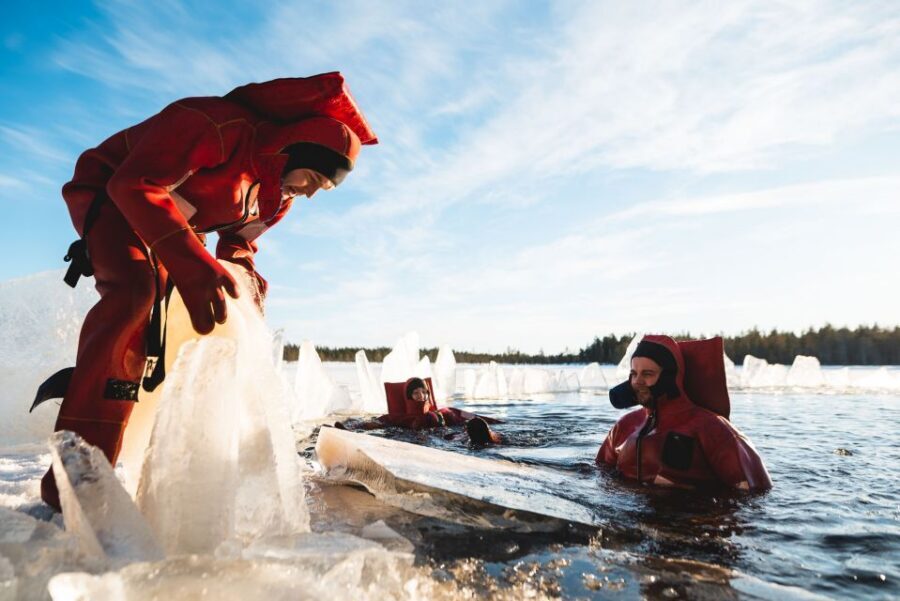
This isn’t a bumpy, adrenaline-only “jump in and survive” situation. The core idea is simple: you float. The lake gives you the drama, not your technique.
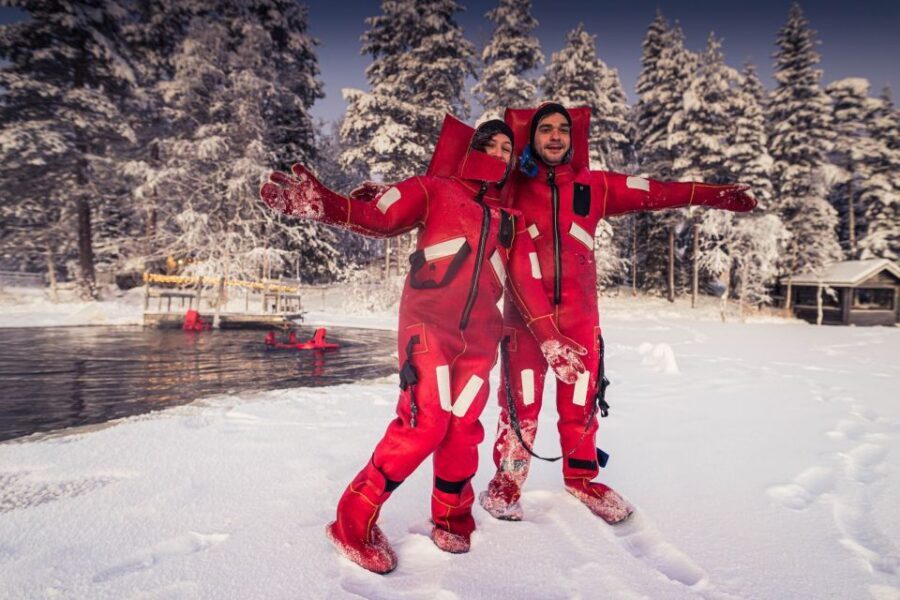
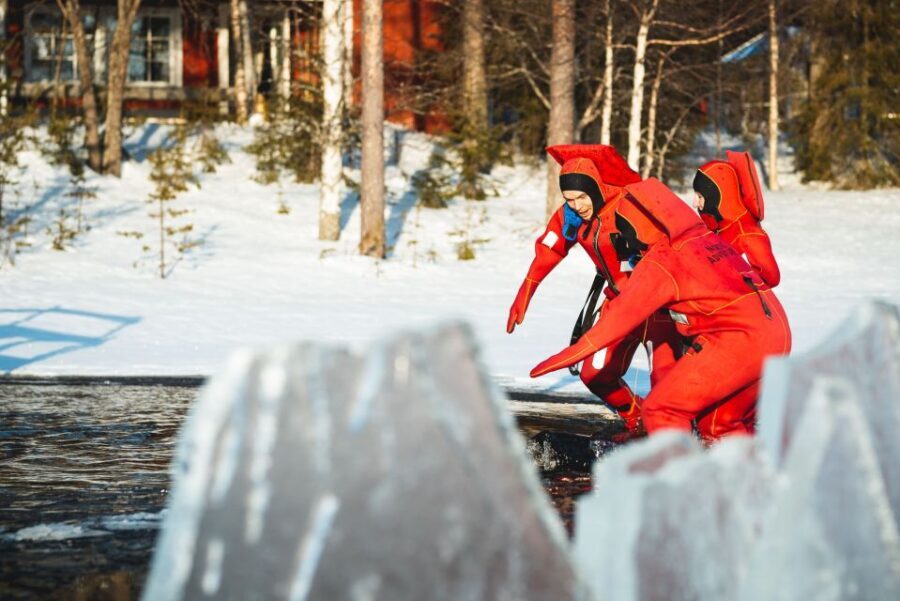
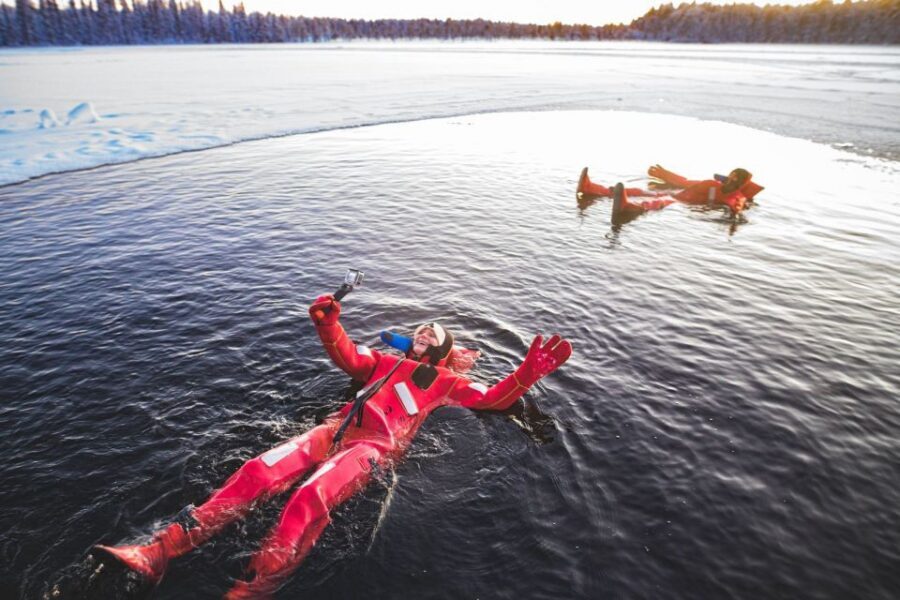
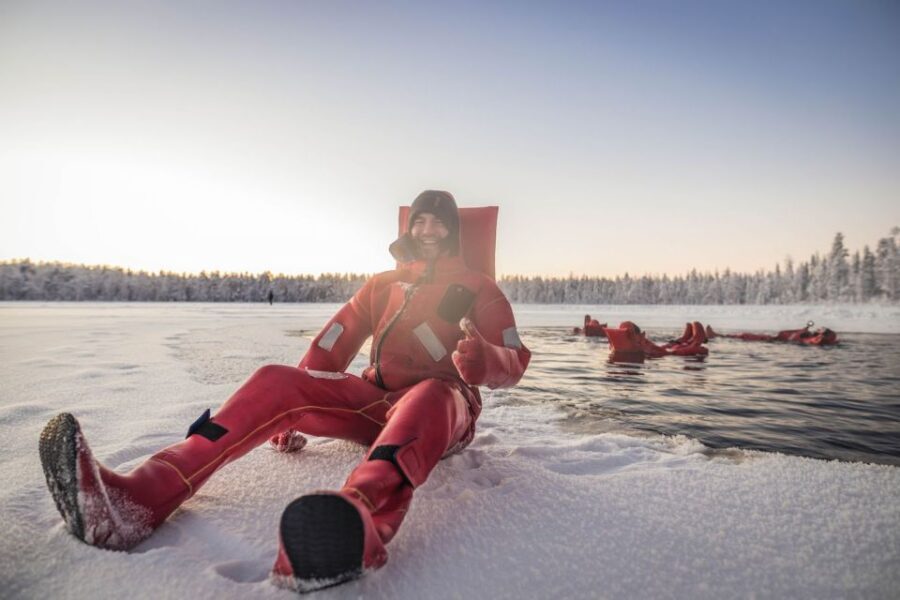
After pickup, you’ll head out to the water and meet the guide at the lakeside area. Then comes the main event: you’ll wear a rescue-style flotation suit designed for long time in cold water, and you’ll spend the session floating on the lake surface. You can take it slow—relax on top of the water and look around—or switch it up by moving a bit and breaking up ice in the area, when the conditions allow.
What makes this experience feel uniquely Lapland is the sensory contrast. One minute you’re aware of the chill because the air is sharp and winter is real. The next minute, you’re warm in the suit and buoyant enough to stop thinking about effort. The cold becomes something you manage, not something that ruins the moment.
You can also read our reviews of more tours and experiences in Rovaniemi.


Thermal rescue suits: the secret sauce (and how to dress for them)
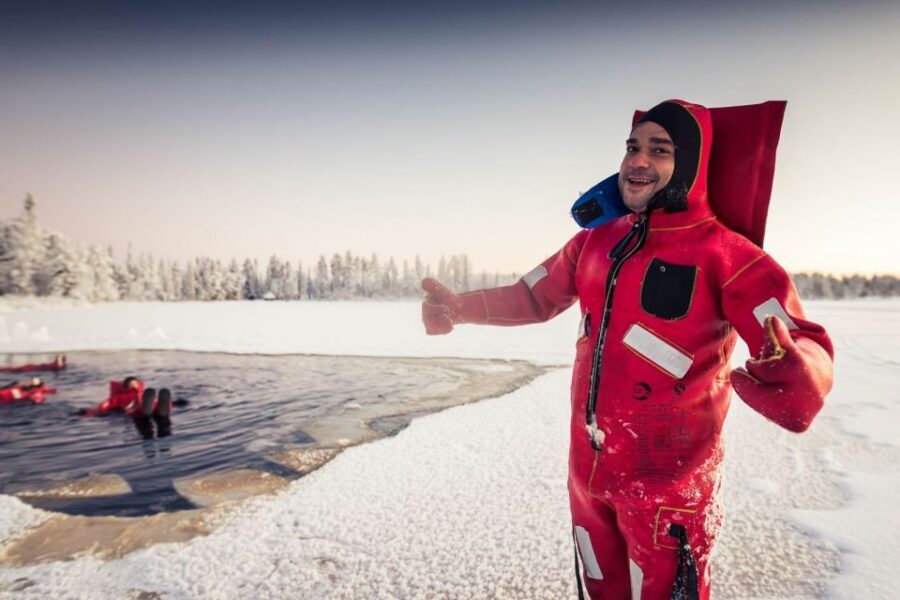
The tour’s biggest value-add is the suit. You’re not relying on luck or personal cold-tolerance. The flotation suit is waterproof, light enough to move in, and built to keep you warm and dry while you float.
So what should you wear? The tour data specifically says bring socks, which tells you the experience expects you to layer comfortably under the suit. You’ll want socks you don’t mind getting a bit crusty from winter conditions. If you’re even slightly worried about cold hands and feet, a useful extra is wearing warmer socks than you think you need, and using them consistently with the suit fit.
A practical detail from past participants: even when the main body feels comfortable, toes and fingers can get cold over time. If you run cold, consider adding a little buffer—some people choose extra socks or gloves to keep extremities happier. (If you do this, keep it simple and comfortable so you don’t mess with how the suit fits.)
And remember: you’re in a flotation suit for a good chunk of time, so dress with mobility in mind. Your goal is to be able to follow instructions and move safely in and out of the water.
Adults-only, small group pacing, and what it feels like in the water
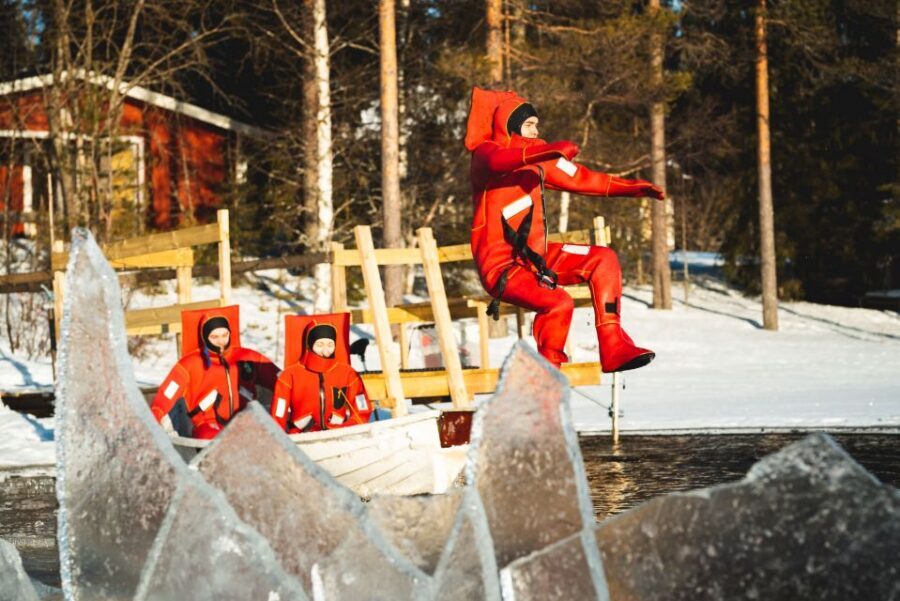
This is listed as adults only, with a minimum age of 14. It’s also a small group experience, which matters more than it sounds. In a cold-water setting, you need time for help, coaching, and calm exits.
In practice, that means the guide can pay attention to your body language—whether you’re confident, cautious, or a little panicked when you first get the waterline touch. Many people start nervous. The suit helps, but your brain may still argue with your body at first. The small-group size is what turns that from a stressful ordeal into a guided routine.
It also helps that the guide is English-speaking and stays with you through the process, including entry and exit. When the pacing is small-group, you’re not rushed, and you’re more likely to get personal reassurance when you need it.
If you’re traveling with teens (14+) who are curious but not sure about full-on winter swimming, this format can work well. It’s structured for the cold part without demanding you become a polar athlete first.
From pickup to lakeside: how the 3 hours tends to flow
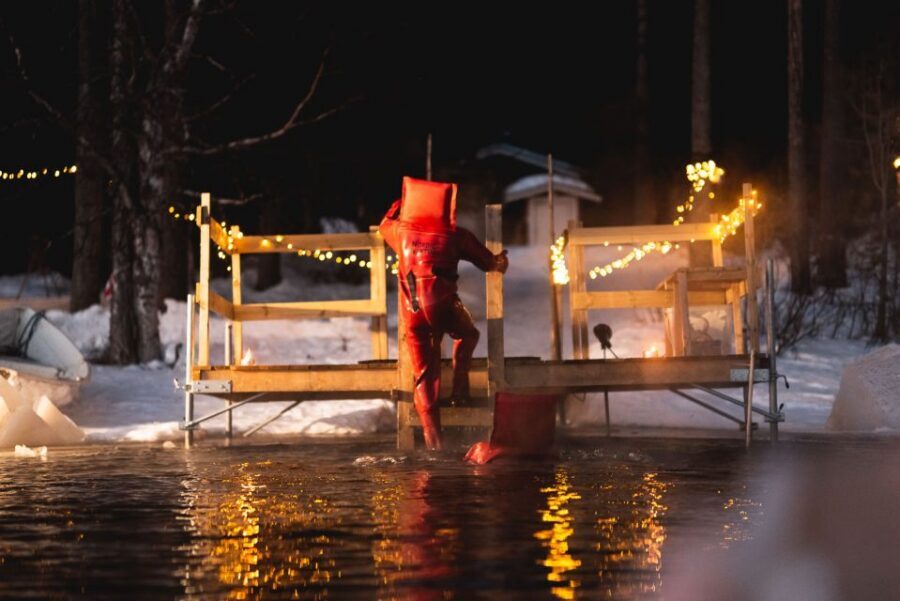
The total duration is 3 hours, including hotel pickup and drop-off. You’ll meet outside your hotel/meeting point—plan to be ready rather than waiting inside.
Once you arrive, the flow usually goes like this:
1) Meet the guide and get set up
You’ll shift from “winter visitor” to “winter participant” quickly. The guide handles the rhythm of suiting and instructions so you’re not left guessing what comes next.
2) Safety briefing and water entry
This is where you get the most value, because the goal is comfort and control. You’ll be told how to enter safely, how to move in the water, and what to do if you feel unsure.
3) Floating time in the lake
This is the main act. Many participants report spending a long chunk of the session floating—often close to an hour, depending on how the group and conditions feel. Even if others exit earlier, you can expect the suit to give you real time in the water.
4) Warm break at the cottage
Then you warm up for real. Hot drinks and cookies are part of the experience, and there’s an open fire element built in.
5) Return transfer
After you’re warm again, you head back to where you started.
One logistics note that’s easy to overlook: the pickup and transfers follow a fixed schedule. So show up at the meeting point about 5 minutes early. Cold mornings don’t forgive delays.
The warm-up moment: open fire, cookies, and hot drinks that actually matter
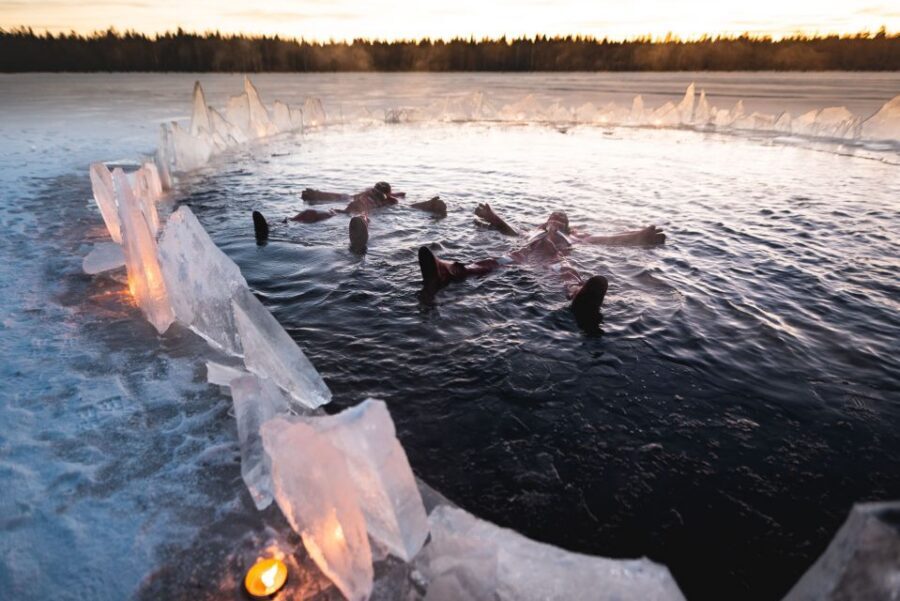
The best part of this tour is that it doesn’t just toss you into the cold. The experience builds in a warm-up break where you can fully reset.
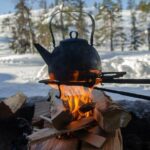
After floating, you’ll return to a cozy cottage environment. An open fire is set up for warming, and you’ll be offered hot drinks and cookies. This is more than a snack stop. It’s the moment when your body stops “protecting itself” and you can actually enjoy the experience as a memory instead of a survival story.
If you love food details, you might be pleasantly surprised by what people recall from past sessions: ginger cookies show up, and hot berry juice has been mentioned too. Even if your cookie taste differs, the pattern stays consistent—warm up, sip something hot, and talk with the guide.
The guide also often shares local context during the warm break and on the drive or lakeside prep. Some people leave feeling like they got a crash course in Finnish winter life—especially around aurora talk and local nature themes.

Safety in real cold: entry, floating, and what you should know before you go
This experience is built around rescue-style flotation gear, but your body still needs to cooperate with safety. That’s why the tour sets limits.
You’ll need regular physical and mental health and the ability to follow safety instructions and move in the water. Knowing how to swim is not a must, but it can make you feel more at ease.
The tour also has clear height and weight limits: minimum height is 150 cm, maximum height is 210 cm, and the maximum weight is 110 kg. The minimum age is 14. There’s also a firm “not suitable for” list, including pregnant women, people with back problems, wheelchair users, and people with mobility impairments.
So here’s the balanced take: you don’t need to be athletic, but you do need to be able to participate physically and comfortably with cold-water movement and directions. If you have any concern about your ability to enter and exit safely, treat this as a serious safety decision, not a casual winter photo op.
Price and value: is $134 worth it for a 3-hour Lapland memory?
At $134 per person for 3 hours, the price can look steep until you break down what you’re getting.
You’re paying for:
- A specialized flotation suit designed for extended time in cold water
- Professional guide time in English, focused on safety and comfort
- Small group pacing, which is a real cost driver in winter activities
- Hotel pickup and drop-off, so you’re not renting a car for one cold adventure
- Warm drinks and cookies, plus the open fire warm-up setup
- A transport operation that’s been rated highly, with 93% of reviewers giving a perfect score
For some travelers, this is the most efficient way to do “arctic water fun” without buying gear or taking on the risk of going in on your own. You also get the structure that makes first-timers feel safe enough to actually enjoy it.
Is it worth it? If you want something you genuinely can’t replicate at home—floating in an icy lake in Rovaniemi—then yes, the value feels justified. If your main goal is a quick photo and you dislike cold environments, you might find a different winter activity fits you better.
Practical tips: socks, cameras, and how to plan for photos
The tour data says bring socks, and it also notes that a camera isn’t included. That’s a hint: the activity isn’t built around you handling camera gear in the water.
In real cold conditions, your best photos usually happen when you let the guide handle the moment and you focus on floating. Some past participants mention that the guide helped with pictures and videos, so if photos matter, plan to follow the guide’s instructions about what you can hold and where.
Also keep in mind the environment will be cold enough that handling electronics for long can be a hassle. So if you bring a phone, keep it in the safe, dry area unless your guide tells you otherwise for your specific session.
Finally, keep your warm-up clothes in mind. After you float, you’ll be ready to bundle up again fast.
Who should book this ice floating experience (and who shouldn’t)
This tour fits best if you want an unforgettable winter activity without needing advanced skills.
You’ll likely enjoy it if:
- you’re comfortable following safety instructions and moving in and out of cold water
- you want a structured, guided experience with a small group feel
- you’re curious about winter Finland and want a “wow” memory that isn’t just standing in snow
- you’re okay with the idea that conditions vary (especially in the shoulder months)
You should skip it if:
- you’re under 14, or outside the height/weight limits
- you’re pregnant
- you have back problems or mobility limitations that make cold-water entry unsafe
- wheelchair users should not plan on this being suitable
If you’re on the fence because you don’t think you can handle the cold, this is where the suit and guiding matter. But don’t confuse “the suit helps” with “you should ignore safety.” Treat it seriously, and you’ll get the best version of the experience.
Should you book ice floating in Rovaniemi?
Book it if you want a rare, genuinely winter-specific activity that mixes cold-water floating with a cozy warm-up and guide-led safety. The thermal suits, small group format, and included warm drinks and cookies make it feel like more than a stunt—you get time in the water, then comfort right afterward.
Skip it if you strongly dislike cold environments, need wheelchair accessibility, or you’re not able to follow instructions and move in the water. Also, if you’re traveling in October or November, hold a flexible expectation about ice and snow on the lake.
If your trip to Lapland includes a “do one crazy thing” goal, this is one of the cleaner, more structured ways to do it—so you can focus on floating and letting the Arctic quiet do its job.
FAQ
How long is the ice floating experience in Rovaniemi?
The duration is 3 hours, including hotel pickup and drop-off.
Is it really suitable if I’m not a strong swimmer?
Knowing how to swim is more comfortable, but it is not a must. You’ll be required to follow safety instructions and move in the water.
What ages and heights are allowed?
The minimum age is 14. The minimum height is 150 cm and the maximum height is 210 cm, with a maximum weight of 110 kg.
Are snow and ice guaranteed on the lake?
No. Snow or ice on the lake cannot be guaranteed in October and November because it depends on natural conditions.
What’s included in the price?
Included are the floating program, thermal rescue floating suits, a professional English-speaking guide, hot drinks and cookies, and hotel pickup and drop-off.
How does pickup work?
Pickup is included, and you should wait outside at the entrance to your chosen hotel or meeting place. The pickup schedule is fixed, so being on time (about 5 minutes early) matters.
What should I bring?
Bring socks. Everything else is handled through the suits and guided setup.
Is this experience accessible for everyone?
No. It’s not suitable for wheelchair users and people with mobility impairments, and it also isn’t suitable for pregnant women or people with back problems.