REVIEW · HELSINKI
Helsinki Walking Tour – Small Group
Book on Viator →Operated by Rento Helsinki Tours · Bookable on Viator
Helsinki clicks faster when you walk it. This small-group tour with guide Jonna pairs big landmarks with the kind of everyday Finnish stories that make the city feel understandable, starting at Senate Square and ending at Oodi Central Library.
My favorite part is the practical culture stops, especially the sauna lessons and the quick detours into politics and religion. One drawback to plan for: this experience needs good weather, so pack layers and expect time outdoors.
In This Review
- Key things I’d bet you’ll like
- Price and time: why $59.28 can feel like good value
- What the small-group format does for your day
- Getting oriented: Senate Square as Helsinki’s postcard with context
- Helsinki Cathedral: more than a big church photo
- The Bank of Finland stop and J.V. Snellman’s statue
- Saatytalo (House of the Estates): politics you can see
- The largest Orthodox Cathedral in North-Western Europe—inside a Lutheran setting
- Allas Pool and sauna etiquette: the culture lesson that sticks
- Kauppatori Market Square: Finnish food, plus power buildings in the same view
- Esplanadi Park: a break that doesn’t feel like a random detour
- Helsinki Central Railway Station and Eliel Saarinen’s Finland
- Oodi Central Library: the ending that feels like a small world
- When you’ll get the most out of this tour
- Quick heads-up: weather and outdoor time
- Should you book this Helsinki walking tour?
- FAQ
- How long is the Helsinki Walking Tour – Small Group?
- What language is the tour offered in?
- What group size is this tour limited to?
- Where do I meet the guide, and where does the tour end?
- What’s included in the price, and what isn’t?
- Does the tour run in bad weather?
Key things I’d bet you’ll like
- Max 8 people means questions don’t get lost in the crowd.
- Free admission at the major stops keeps the day simple and keeps your money for food.
- Sauna etiquette at Allas Pool gives you a real-life script for what to do and how to behave.
- Oodi Central Library inside is the kind of public space you don’t expect to find in a city tour.
- History with humor, including stories tied to statues and national identity.
Price and time: why $59.28 can feel like good value
At about 2 hours 30 minutes for roughly $59.28, you’re paying for more than sightseeing. You’re buying an organized path through the key layers of Helsinki—city founding symbols, national politics, religion, and modern public life—plus a live guide who answers questions as you go.
You also get a “hidden win” in the structure: the major stops are marked as admission ticket free, so you’re not constantly budgeting extra entry fees. The tour doesn’t include snacks, so I recommend you treat this as a light-break morning/early afternoon plan and bring a small snack if your energy runs on snacks.
Finally, this one books ahead often (around 159 days on average). If your dates are fixed, don’t wait for the last minute.
You can also read our reviews of more walking tours in Helsinki



What the small-group format does for your day
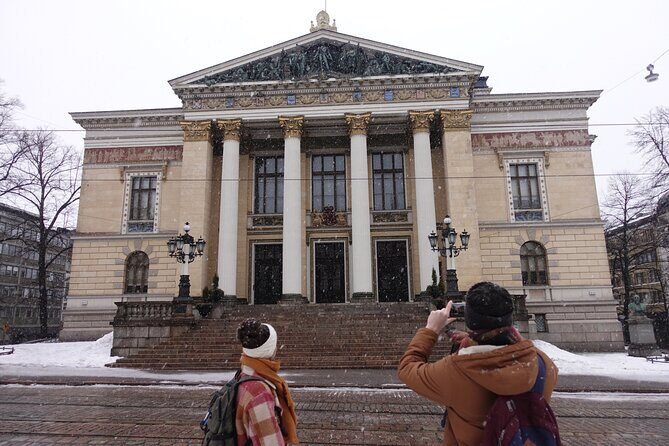
With a maximum of 8 travelers, you get a calmer rhythm. Instead of a guide blasting facts to a wall of people, you’re moving as a tight circle, stopping often enough to ask why something matters.
One detail I like from the tour style: Jonna tends to start by learning what you’re personally curious about. Then she brings those threads back later at the right stops—so the history feels less like a lecture and more like your questions getting answered at street level.
If you like a tour that moves at human speed—enough time to look closely, take photos, and ask follow-ups—this group size is a big part of the value.
Getting oriented: Senate Square as Helsinki’s postcard with context
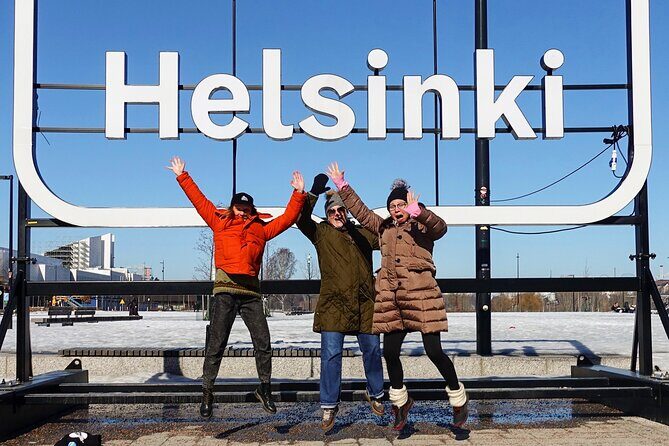
Your walk begins at Senate Square, the city’s iconic viewpoint and the place where Helsinki’s identity shows up at once. You’ll see the skyline story of the city’s power centers: Helsinki Cathedral, the old Senate, the University of Helsinki, the National Library, and the Statue of Alexander II.
This stop matters because it’s not just pretty. It’s a shortcut into how the city shifted from a small fishing spot into a capital. Once you understand that arc, the rest of the tour lands more clearly—because later buildings and statues start to feel like evidence, not random sights.
It’s also a good first stop logistically. It’s central, and it sets the walking route without making you work for it.
Helsinki Cathedral: more than a big church photo
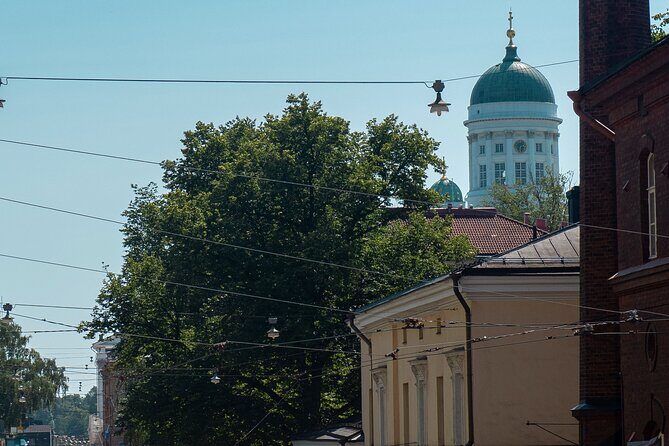
Next you head to Helsinki Cathedral, inaugurated in 1852. Yes, it’s the main sight and the photos are easy here. But the tour focuses on the odd and memorable bits that turn architecture into a story.
You’ll hear anecdotes around the building—down to the surprising detail that the architect reportedly hated Helsinki, and the tour teases out the reasons. You’ll also get a quick sense of Finland’s religious landscape and learn when locals gather for casual moments in front of the cathedral stairs—picnic culture as a human detail, not a museum exhibit.
This is a short stop, but it’s built to give you a mental map: where the big symbols are, and what people do around them.
The Bank of Finland stop and J.V. Snellman’s statue
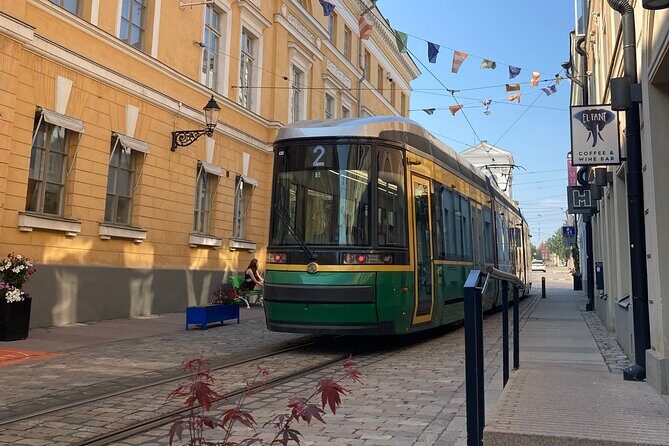
Right behind the cathedral sits the Bank of Finland, a building from 1883. The tour uses this spot to talk about J.V. Snellman, a 19th-century poet and philosopher who influenced the nationalistic movement before Finland became independent.
Then comes the part that makes you look twice: the guide points out the big bullet holes in Snellman’s statue and explains the story behind it. That’s the kind of detail that you’d easily miss if you were just snapping photos, and it’s also the kind of detail that makes the city’s identity feel real.
Practical tip: if you’re planning photos, arrive ready to pause. This stop rewards a slow look at the statue and the building’s position right in the center of the scene.





Saatytalo (House of the Estates): politics you can see
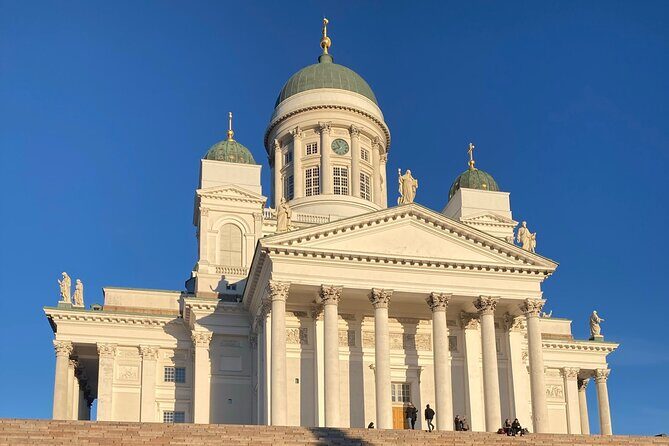
At Saatytalo—the House of the Estates—the tone shifts from national symbols to governance. This neo-renaissance building is associated with when the estates of 19th-century Finland gathered to discuss politics.
Even if you’re not a “politics person,” this is a helpful stop. It gives you context for how Finland structured decision-making, and it also explains why the city’s major buildings aren’t only decorative—they’re functional landmarks in the story of the country.
This stop is brief, but it’s the kind of short pause that helps you connect the earlier monuments to later cultural habits.
The largest Orthodox Cathedral in North-Western Europe—inside a Lutheran setting
One of the more interesting questions the tour tackles is why Helsinki has a huge Orthodox cathedral when Finland is known for Lutheran traditions. The stop is focused on that contrast: the largest Orthodox Cathedral of North-Western Europe in a country where Lutheranism is a big part of the mainstream identity.
You don’t need to be religious to get value here. It’s a quick lesson in geography, history, and how borders and identities overlap. Standing near a building like this makes the city’s story feel less neat and more true—because cultures don’t stay in tidy boxes.
If you like learning through contradictions—things that don’t fit your assumptions—this is one of the stops that delivers.
Allas Pool and sauna etiquette: the culture lesson that sticks
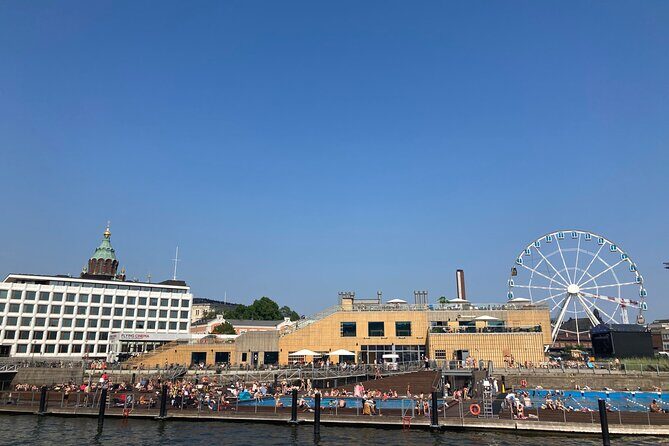
No Helsinki city tour feels complete without a sauna conversation. Here, the guide brings you to Allas Pool for a dedicated stop on saunas, describing why they’re such a shared Finnish pastime and how they show up in everyday life.
The most useful part is sauna etiquette. That’s the difference between knowing Finland has saunas and knowing how people actually behave in that setting. The tour’s angle is practical, not preachy.
I love this stop because it turns “quirky stereotype” into social knowledge you can carry into future travel. Even if you never book a sauna session on this trip, you leave with the mental model for how Finns talk about it and what respect looks like.
Kauppatori Market Square: Finnish food, plus power buildings in the same view
At Kauppatori, you hit Helsinki Market Square, a place loved by both locals and visitors. This stop isn’t just about buying something—it’s about understanding what Finnish gastronomy looks like on the ground.
The guide talks about Finnish food culture as you pass through the market area. It’s also a visual shortcut to governance: the tour route takes you past the President’s Palace and Helsinki City Hall.
So you get a split-screen feeling. One side is everyday life and food. The other side is official power. That pairing is why this stop works for a first-time visitor: it shows you how public spaces overlap across social categories.
If you’re hungry, this is a good moment to plan a quick bite afterward. The tour itself doesn’t include snacks, so use this stop as a lead-in to your next meal.
Esplanadi Park: a break that doesn’t feel like a random detour
Then you stroll into Esplanadi Park, described as a Parisian-style park in the middle of the city. This is your palate cleanser: a quick change of pace with photo opportunities and a calmer atmosphere than the main squares.
There’s also a fun detail: the tour points out a statue that seagulls love most. It’s the kind of small local observation that makes your pictures feel more specific to Helsinki, not generic.
This is where I’d encourage you to slow down for 2 minutes. Look up at the buildings around the park and take in the geometry. Parks like this are how a city breathes.
Helsinki Central Railway Station and Eliel Saarinen’s Finland
The tour moves to Helsinki Central Railway Station, originally from 1919, designed by architect Eliel Saarinen. The station isn’t just transportation. It’s a way to understand why Finland thinks big about rail connections.
You’ll pass by and get commentary on the wide and incredible railway network of the country. Around the railway square you’ll also see references to major cultural institutions, including the National Gallery, Ateneum, and the National Theatre of Finland.
This is a short stop, but it’s a smart one. It ties the city’s architecture to how people move around Finland, and that mindset helps you plan any future day trips.
Oodi Central Library: the ending that feels like a small world
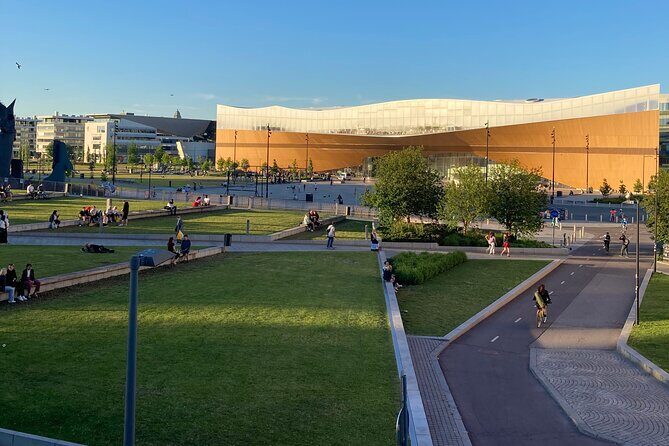
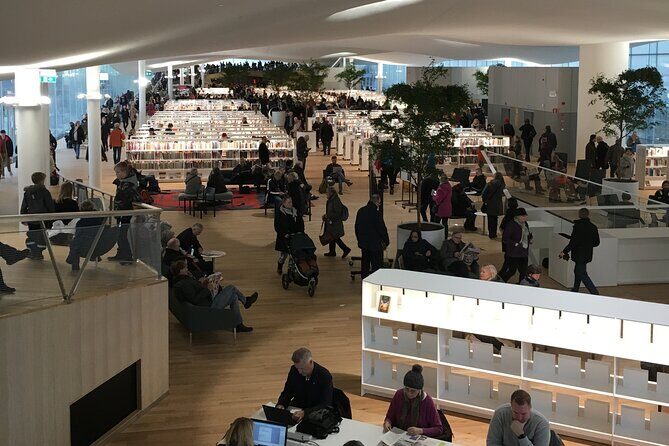
The tour’s final act is Oodi Central Library, often described as one of the best public libraries in the world. The vibe here is different from a typical library visit. This is public space built for multiple kinds of life.
You’ll get a tour that goes beyond books, including recording studios, 3-D printers, a lunch restaurant, boardgames, and even sawing machines—plus the books, of course. The idea is that learning isn’t stuck behind quiet doors. It happens through making, testing, and community.
This stop is also a strong closer because it connects back to earlier themes. You spent the day looking at national identity, politics, and culture. Then you end in a place that shows how those values show up now: access, public building, and tools for everyone.
Logistics you’ll appreciate: you finish in front of Oodi, roughly 5 minutes from the Railway Station and about a 15-minute walk from the starting point.
When you’ll get the most out of this tour
This walk is a great match if you:
- Want a first-day route that helps you decide what to explore next on your own.
- Like stories about Finnish social habits, not only big historical facts.
- Enjoy tours where the guide responds to questions in real time.
- Care about practical culture knowledge, especially saunas and etiquette.
It’s also a solid choice for solo travelers, couples, and small families. The small-group format keeps it manageable without feeling rushed.
Quick heads-up: weather and outdoor time
The experience requires good weather. Helsinki can be chilly, and even when it’s not raining, it can be windy near water and open squares. I’d plan for layers and comfy shoes you can stand in for a couple of hours.
Should you book this Helsinki walking tour?
Yes—if you want an efficient, story-driven introduction that doesn’t stay trapped in dates and facts. The combination of free-entry stops, a tight group size, and a guide like Jonna (with humor, strong attention to questions, and a knack for connecting national stories to everyday life) makes it a high-value way to orient yourself.
If you’re someone who only wants museums or long indoor time, you might find the outdoor pace a bit much. But for most people arriving with limited time, this tour does what a good city introduction should: it gives you places, context, and a handful of details you’ll remember long after the photos fade.
FAQ
How long is the Helsinki Walking Tour – Small Group?
It runs for about 2 hours 30 minutes.
What language is the tour offered in?
The tour is offered in English.
What group size is this tour limited to?
The tour has a maximum of 8 people.
Where do I meet the guide, and where does the tour end?
You start at Senate Square in Helsinki. You finish in front of Oodi Central Library, at Töölönlahdenkatu 4, 00100 Helsinki.
What’s included in the price, and what isn’t?
The tour includes a native guide’s service. Snacks are not included.
Does the tour run in bad weather?
This experience requires good weather. If it’s canceled due to poor weather, you’ll be offered a different date or a full refund.