REVIEW · HELSINKI
Helsinki Walking Tour with a Sociologist
Book on GetYourGuide →Operated by Helsinki Dreamdays Walking Tour · Bookable on GetYourGuide
Helsinki feels different when someone explains the social logic. This 3-hour walk is led by a PhD student in Sociology, so you don’t just see famous sights, you learn how they connect to everyday life and power. I especially like the small group pace and the social context lens that turns landmarks into real-world stories. The main drawback: it’s a solid stroll, about 5 to 6 km, and it’s not suitable for wheelchair users.
You’ll cover a lot of ground in a smart loop that mixes government buildings, churches, libraries, theaters, and the market area, then ends at Oodi. The tour runs year-round in regular weather, so you’ll want comfortable shoes and the right layers.
In This Review
- Key Points to Know Before You Go
- Why a Sociologist-Led Walk Makes Helsinki Make Sense
- Meeting at Fazer Café and Getting Your Bearings on Kluuvikatu
- Senate Square and Helsinki Cathedral: Power, Religion, and Public Space
- The National Library and Oodi: How Public Learning Works
- The Presidential Palace and Parliament House: Where Decisions Feel Close
- Uspenski Cathedral, Allas Sea Pool, and the Market Squares: Real Helsinki Energy
- Swedish Theater, Kappeli, Finnish National Theatre, and Musiikkitalo: Culture in Motion
- Runeberg Monument to Ateneum: Identity, Memory, and Artistic Authority
- Helsinki Central Station to City Museum to Sanomatalo: Movement and Everyday Culture
- Good Value for $56: What You’re Really Paying For
- Who This Tour Suits Best (And Who Should Think Twice)
- Should You Book This Helsinki Sociologist Walking Tour?
- FAQ
- How long is the walking tour?
- What does the tour cost?
- Where do I meet the guide?
- What language is the guide?
- How far will I walk?
- What sights are included on the route?
- Are food and drinks included?
- Is the tour wheelchair-accessible?
Key Points to Know Before You Go
- Sociology lens: you’ll connect Helsinki landmarks to how communities and institutions shape daily life
- Small group (max 6): easier questions, less rushing, more back-and-forth
- Big orientation value in 3 hours: you’ll see many key spots without spending all day glued to maps
- A real mix of Helsinki: state power, churches, public spaces, arts, and markets all on one route
- English live guide: clear explanations throughout, not just pointing and walking
- Plan shifts a bit: the route can adjust for weather, holidays, and events
Why a Sociologist-Led Walk Makes Helsinki Make Sense

Most Helsinki tours hand you facts. This one adds the why behind the facts, using a sociology angle as you move street to street. That matters, because Helsinki isn’t only about impressive buildings. It’s about how people organize space, create rules, gather around culture, and negotiate difference.
You’ll get a well-rounded feel for the city’s historical and contemporary significance without needing a crash course before you arrive. And because the guide is a sociology PhD student and local guide, the conversation tends to land on how institutions show up in real life, not just what dates appear on plaques.
One detail I appreciate is that the tour isn’t locked to a museum schedule. You’ll also get guidance for how to keep exploring after the walk, turning everyday observations into something you can actually interpret.
You can also read our reviews of more walking tours in Helsinki



Meeting at Fazer Café and Getting Your Bearings on Kluuvikatu

You meet in front of Fazer Café, in the Kluuvikatu area. That’s a practical start point because it puts you near central streets right away, so you’re not wasting time getting to the first big sight.
From the first minutes, the pace is built for walking rather than sitting. This is one of those tours where you’ll stay curious because the guide keeps linking what you’re seeing with how Helsinki operates.
Bring comfortable shoes. You’ll be moving for about 3 hours and covering roughly 5 to 6 kilometers, so your feet will do most of the work. If you’re the kind of traveler who likes photos, plan for some stops to frame shots, but understand the priority is the walk and the explanations.
Senate Square and Helsinki Cathedral: Power, Religion, and Public Space
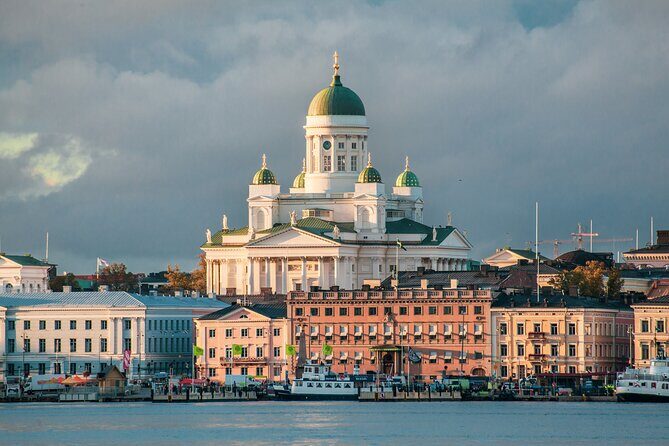
Your route begins with Senate Square, where you’ll get a guided stop. Even if you’ve seen it in pictures, it helps to hear how this kind of public space functions as a stage for civic identity.
Next is Helsinki Cathedral, guided briefly. The value here is not only the building itself, but what the guide connects it to: how belief and civic life share space in a city layout, and how that shapes what people notice day to day.
A practical tip: keep your timing flexible in this area. This part of Helsinki is a “hang out here” zone, so it can get crowded depending on season and events. The tour stays efficient, but you’ll still want to stay patient when the sidewalk fills up.
The National Library and Oodi: How Public Learning Works

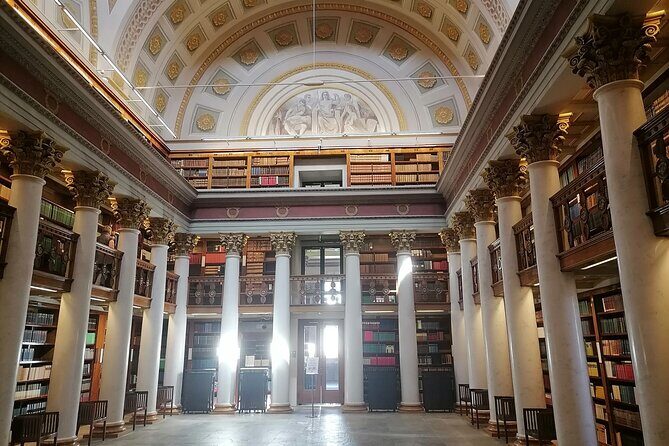
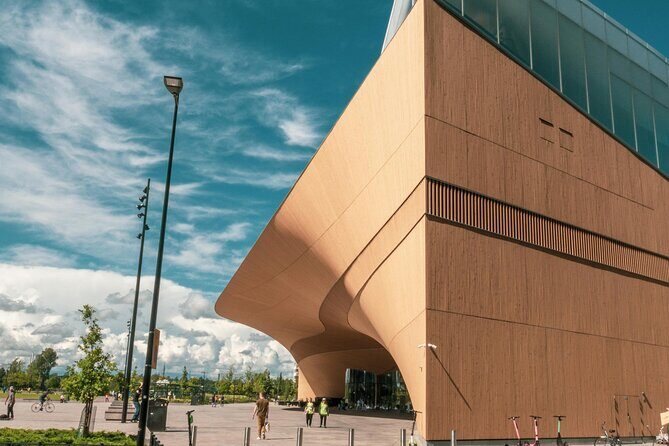
You then move to the National Library of Finland for a guided look, followed by Helsinki Central Library Oodi. These stops are especially strong when you care about modern city life, because libraries here aren’t treated like quiet back rooms. They’re presented as part of public culture and how people use shared civic resources.
I like this sequence because it gives you a continuity thread. You go from a place that represents the state and society’s institutions to places where people actually gather, learn, and participate.
Oodi is also where you finish, which is a nice wrap. After walking through so many parts of the city, ending at a public library makes the experience feel grounded. You can keep lingering even after the guide’s done.
If you’re hoping for deep time periods and specific anecdotes at every stop, you might find the guide’s style varies. One comment I’ve heard about this tour format is that some visitors want a few more extra stories. If that sounds like you, ask for one or two examples as you walk.
The Presidential Palace and Parliament House: Where Decisions Feel Close
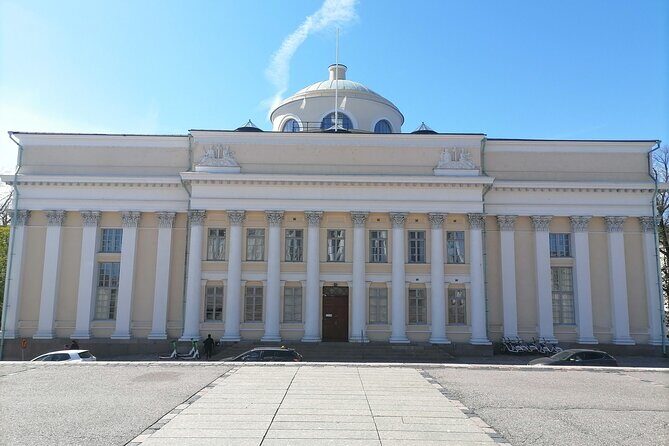
The tour includes the Presidential Palace and Parliament House, Helsinki, each with a short guided stop. These aren’t just photo stops. The sociology lens tends to focus on how government shapes daily rhythms, from what gets built and maintained to how public authority shows itself in architecture and space.
This is a good part of the tour if you’re curious about how countries show their values physically. You’ll likely come away thinking about legitimacy and representation in a way you can’t get from a postcard.
Because these are major official areas, allow for normal city realities like security boundaries or slower movement through certain points. The tour keeps the stops brief, but you’ll still want to stay aware of your surroundings and follow the guide’s instructions.





Uspenski Cathedral, Allas Sea Pool, and the Market Squares: Real Helsinki Energy

After the formal institutions, you shift into a more mixed slice of city life.
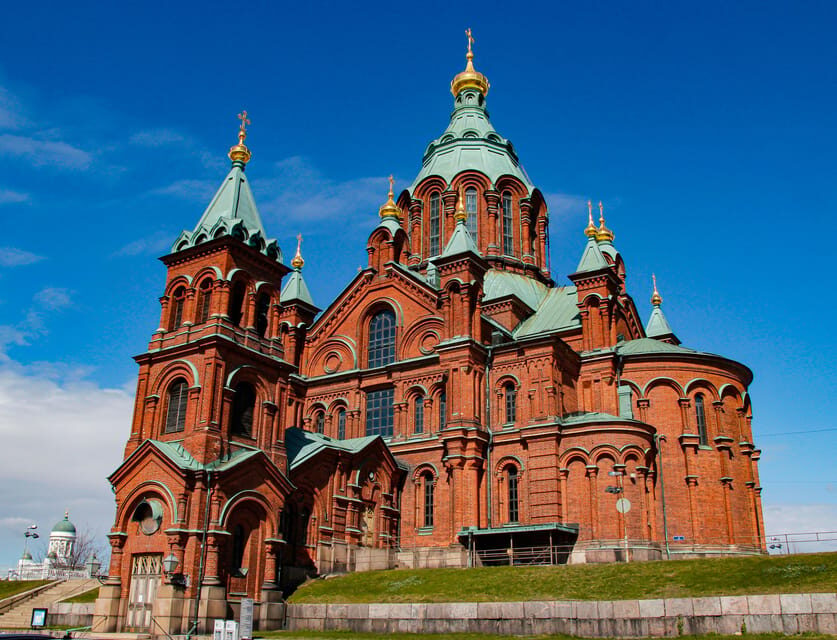
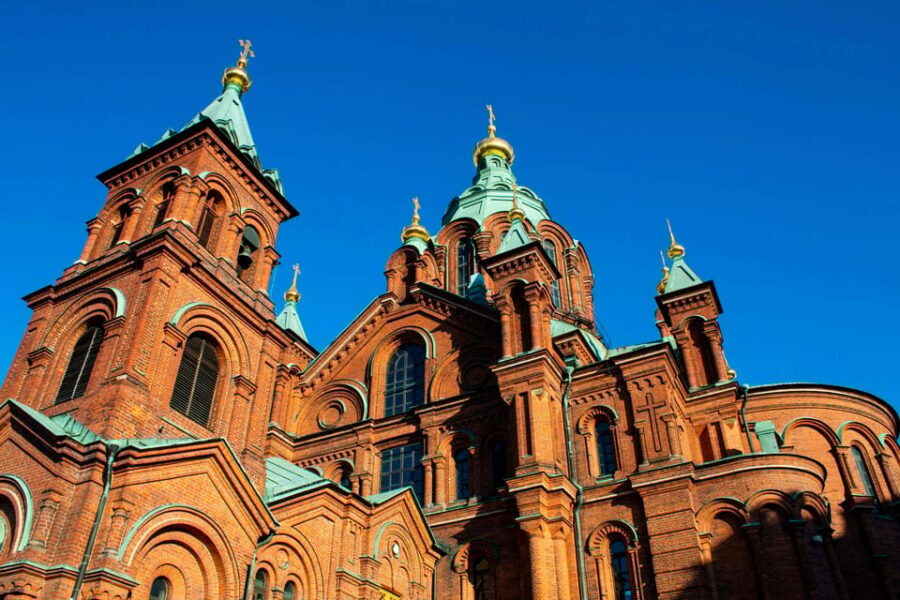
You’ll visit Uspenski Cathedral with guided commentary. The point here is the way religious architecture contributes to how neighborhoods feel and how cultural identity appears in the streetscape. Even if you don’t go inside on your own time, the guided framing helps you read the area with more context.
Then there’s Allas Sea Pool for a short guided look. This stop helps balance the religious and political scenes with something more everyday and active. It’s a reminder that Helsinki isn’t only museums and monuments. It has public leisure that fits into the city’s routines.
From there, you go to Market Square, Helsinki, followed by Market Hall, Helsinki. This is where the tour gets especially practical. Markets are where you see the city’s economy, local habits, and “what people choose” in a very tangible way. The guide’s sociologist framing makes it less about shopping and more about how a city organizes exchange and community.
If you’re hungry, note that food and drinks are not included, so you’ll want to plan your meals around the walk. You can absolutely grab something nearby, but don’t expect the tour itself to feed you.
Swedish Theater, Kappeli, Finnish National Theatre, and Musiikkitalo: Culture in Motion
The arts stops on this route are about more than architecture. You’ll visit the Swedish Theater, Kappeli, Finnish National Theatre, and Musiikkitalo.
Why this sequence works: Helsinki has a strong culture-and-language story, and the tour uses the buildings to help you understand how culture and identity share space. The sociologist guide tends to tie performances and cultural institutions to how people build community and meaning.
Also, these areas are good for slowing down mentally. Even brief guided moments give you a chance to notice details you might otherwise miss: how people approach a building, what streets feel designed for, and how public space supports gathering.
Quick reality check: theaters and concert halls often pull people in at certain times. Depending on the day, you might see more activity near doors and entrances. Keep your group together and follow the guide’s pace.
Runeberg Monument to Ateneum: Identity, Memory, and Artistic Authority
Next you’ll stop at Johan Ludvig Runebergin muistomerkki and then Art Museum Ateneum. These give the tour a memory-and-meaning layer.
This is a good stretch for travelers who like symbolism. Monuments and museums tell you what a city decides is worth preserving and discussing. In a sociology-led format, that becomes a question of identity: who is centered, which narratives are carried forward, and how art and commemoration support social cohesion.
One practical tip: if you want photos here, take them early. This portion can attract attention because it mixes recognizable landmarks with open areas where people like to stand and look around.
Helsinki Central Station to City Museum to Sanomatalo: Movement and Everyday Culture
You’ll pass Helsinki Central Station with a guided stop. That’s more than a transportation hub in the context of this tour. Stations are where cities compress time: arrivals, departures, and the everyday flow of newcomers and locals. In a sociology framework, it’s a place where society in motion becomes visible.
Then you’ll visit Helsinki City Museum for guided context. City museums can feel like they exist for history buffs, but in this kind of tour they’re positioned as tools for understanding how a city narrates itself now, not only how it narrated itself earlier.
The walk also includes Fazer Café Sanomatalo with a guided stop, plus a brief Ateneum moment earlier. This is where you get a taste of place-making through brands and public buildings. It’s also a nice change of pace because cafes and offices often make people more relaxed during the walk.
By the time you approach the end, you’ve gone from formal governance to cultural spaces to places where people just live and move. That arc is part of the value.
Good Value for $56: What You’re Really Paying For
At $56 per person for a 3-hour guided walk, you’re paying for three things: time, interpretation, and efficiency.
If you self-walk Helsinki’s center, you’ll see many of these sights eventually. But you’ll probably spend time figuring out how everything connects. Here, the guide supplies that glue. You also get a live English guide, and the group is limited to 6 participants, which usually means you can actually ask questions without getting lost in a crowd.
For many travelers, the best return on this price is simple: you leave with better mental maps. Not only street maps, but social maps. You’ll understand what kind of institutions you just walked past and why the city places them where it did.
And you’ll still have plenty of unstructured time afterward, because the tour itself does not include food or drinks, and it doesn’t lock you into a long museum day.
Who This Tour Suits Best (And Who Should Think Twice)
This tour is a great fit if:
- you like cities that show their values through architecture and public space
- you enjoy discussions about society, institutions, and how people use shared places
- you want a central Helsinki orientation without spending an entire day indoors
It may be less ideal if:
- you have mobility limits and can’t handle 5 to 6 km on foot
- you need wheelchair-friendly routes (this one is not suitable for wheelchair users)
- you want a tour that includes meals or transportation, because those are not part of the package
If you’re picky about story style, also consider your preference for anecdotes. The overall approach is guided and structured, with opportunities for questions, but a couple of visitors wanted even more extra stories.
Should You Book This Helsinki Sociologist Walking Tour?
I think you should book if you want more than a checklist. The combination of a short walking loop plus sociology-focused interpretation makes the city feel less like a set of landmarks and more like a living system.
Choose it if you’re coming for orientation and you like guided context, especially around libraries, government areas, and the market zone. Ending at Oodi is also a smart finish, because it gives you a practical place to pause and keep exploring on your own after the tour.
Skip it if walking distance is a deal-breaker or if you’re looking for a tour that includes food, transportation, or a fully accessible route.
If you do book, wear the shoes you trust and keep a curious mindset. Helsinki rewards observation, and this format helps you spot what matters.
FAQ
How long is the walking tour?
It lasts 3 hours.
What does the tour cost?
The price is $56 per person.
Where do I meet the guide?
Meet in front of Fazer Café (the starting location is Kluuvikatu).
What language is the guide?
The tour is guided in English.
How far will I walk?
You should expect to walk about 5 to 6 kilometers.
What sights are included on the route?
You’ll see places such as Senate Square, Helsinki Cathedral, the National Library of Finland, Oodi, the President’s Palace, Uspenski Cathedral, Allas Sea Pool, Market Square and Market Hall, Swedish Theater, Kappeli, Finnish National Theatre, Parliament House, Musiikkitalo, Johan Ludvig Runebergin muistomerkki, Helsinki Central Station, Helsinki City Museum, Fazer Café Sanomatalo, and Art Museum Ateneum. The tour finishes at Oodi.
Are food and drinks included?
No, food and drinks are not included.
Is the tour wheelchair-accessible?
No, it is not suitable for wheelchair users.