REVIEW · TURKU
Inspiring Turku – Private Walking Tour
Book on Viator →Operated by Opatrip.com US LLC – Local Tours in Finland · Bookable on Viator
Some cities reward slow steps.
Turku does, and this private 2-hour walking tour strings together the big-name sites with just enough local color to make them feel personal. I like how you cover real landmarks fast, and I also like that most stops are free on your own dime, so your money goes toward the guide’s time and good context—not ticket lines.
You’ll start at Turku Cathedral, then move through the Old Great Square, the City Library, Market Square, Turku Market Hall, and the City Hall—before finishing near the river at Riverboats Aura & Jakke. One catch to plan around: the cathedral museum and Qwensel house have admission fees not included, so bring a little extra for those two stops.
If you want a clean hit list with local guidance and minimal fuss, this one fits. If you’re the type who likes wandering off-script for long stretches, you may feel the pace is a bit focused for a private walk.
In This Review
- Key highlights you’ll actually use in Turku
- Getting your bearings: how this tour keeps Turku simple
- Start at Turku Cathedral: the big role this church played
- Old Great Square: where history shows up as events
- Turku City Library: not just books, but community services
- Market Square: 19th-century center, today’s hangout
- Turku Market Hall: tradition you can shop through
- City Hall and the Great Fire: a building with second lives
- Qwensel house and the Pharmacy Museum: daily life, not just dates
- Riverboats Aura & Jakke: the finish that makes the city feel wider
- Price and value: is $656.52 per person worth it?
- Who this tour suits best (and who should skip it)
- Should you book Inspiring Turku – Private Walking Tour?
- FAQ
- How long is the Inspiring Turku private walking tour?
- Is it a private tour or shared with other groups?
- What’s included in the price?
- Are there any admissions fees I should budget for?
- Where does the tour start and end?
- Can I cancel for free if my plans change?
Key highlights you’ll actually use in Turku

- Private guide, not a crowd: only your group joins this walk, so questions are easy and the pace stays comfortable.
- A fast, logical route: you move from cathedral to squares, then to markets, then toward the river end point.
- Two paid add-ons to budget for: cathedral museum and Qwensel house aren’t included, while most other stops are free.
- Local “everyday culture” stops: the City Library and Market Hall show Turku life beyond postcards.
- River time as the finale: finishing by Riverboats Aura & Jakke gives you a natural next step if you want to keep exploring.
- Architecture with stories: you’ll hear why buildings changed roles—like the City Hall’s restaurant-to-town-hall path.
Getting your bearings: how this tour keeps Turku simple
Turku can feel like a city where history shows up in normal places: a square that hosts festivals, a market hall that’s both traditional and still useful, and old buildings that survived big events. What I like about this tour is that it doesn’t ask you to do homework. It gives you a straight path and a guide who can connect the dots so you understand why each stop matters.
You’re also not locked into constant ticket buying. Most locations are free to enter and enjoy, which is a big deal when you’re trying to make a short visit feel complete. The route is timed at about 2 hours, with each stop running roughly 11–12 minutes, so it’s built for getting a lot in without turning sightseeing into a slog.
Because it’s private, you’re not squeezed into a group shuffle. That matters at places like the market and the pharmacy museum area, where it’s easy to slow down and look without feeling rude or rushed.
You can also read our reviews of more walking tours in Turku

Start at Turku Cathedral: the big role this church played
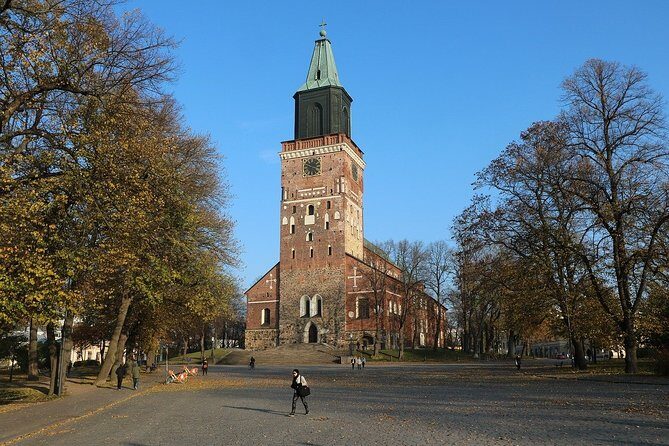
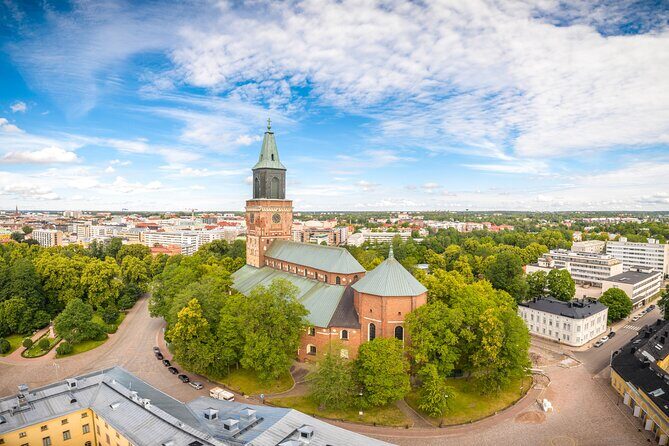
Your walk begins at Turun tuomiokirkko (Turku Cathedral) on Tuomiokirkonkatu 1. This is described as one of the most important religious buildings in Finland, and even if you’re not chasing sacred architecture, you can still appreciate what “important” means here: it’s a site with history behind how it was created, and it clearly anchors the city.
There’s also a paired museum, but here’s the practical part: cathedral admission isn’t included for the museum. That museum has a small entrance fee and expands on the cathedral’s past—so if you like context, plan for an extra stop inside.
A simple tip: when you’re at the cathedral, take a few seconds to look at it like you’re seeing it for the first time in years. Then shift gears and listen for the story your guide tells about the building’s significance. That mix—first glance plus explanation—is what makes this stop pay off.
Old Great Square: where history shows up as events

Next you’ll be at the Old Great Square, which acts as a stage for events such as the Declaration of Christmas Peace, a Medieval Market, and even a microbrewery festival. That combination is very “Turku”: old square, modern use, and plenty of reasons to visit even if you’re not timing your trip to a particular event.
Around the square, the buildings matter too. You’ll get references to places like Brinkkala Mansion and the Old Town Hall, which helps you read the area instead of just looking at it.
The main drawback? This area is often more about vibe than quiet museum-style detail. If you want a silent, slow experience, the square can feel like you’re in the middle of city life. Still, that’s the point. It’s one of the best places to understand how the past is still active.
Turku City Library: not just books, but community services
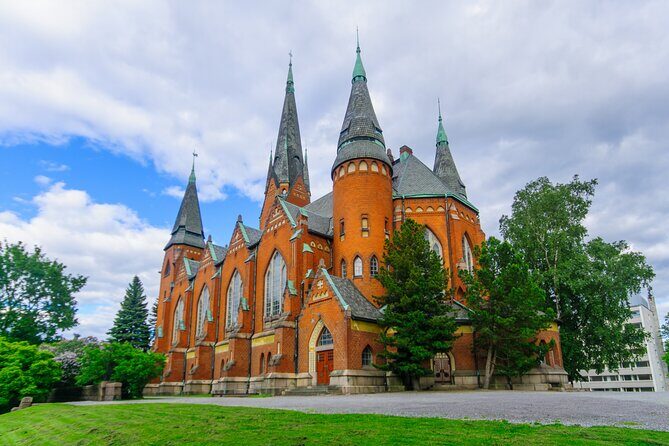
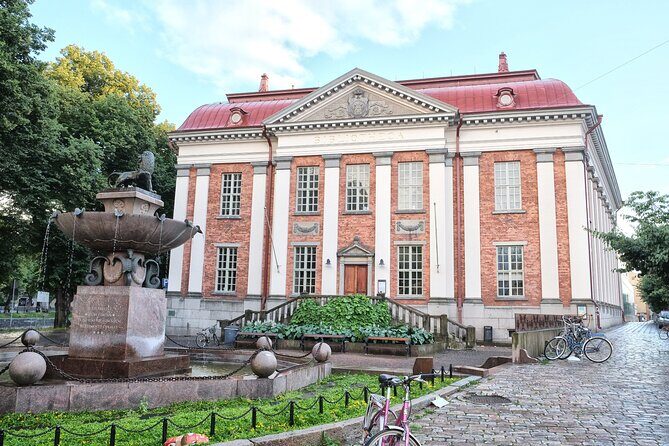
Then you’ll head to the Turku City Library, where the focus is on real public life. The library offers main reading spaces plus events and exhibitions, and the building connects to a wider network of 10 other branches that act as community centers with their own group activities.
I like stopping at places like libraries because they show what’s valued in a city—how people learn, meet, and spend time. It also gives you a break from just churches and markets. If you’ve been sightseeing for hours, the library can feel like a calmer chapter.
You won’t need tickets here—entry is free—so you can spend your short visit deciding what you’d explore if you had more time. Even if you don’t go inside for long, it’s a strong stop for understanding local community rhythm.
Market Square: 19th-century center, today’s hangout
The Market Square is at the heart of Turku and is described as a popular tourist destination with shops, restaurants, cafes, and good seating. It’s a 19th-century square, which matters because it explains why the area feels like a center for everyday life, not just a decorative landmark.
When you’re at a square like this on a short schedule, your best move is to pick one small objective. I’d do one of these:
- grab a drink or pastry break,
- sit for a few minutes to watch how people move,
- or take a slow photo sweep of storefronts and corners.
The bonus here is the “seat and recharge” effect. You’ll have other stops soon, so the square’s seating areas can be your reset button.


Turku Market Hall: tradition you can shop through
After the open-air feel, you’ll move to Turku Market Hall, a traditional shopping center in Finland and one of the second oldest in the country, according to the tour info. The hall mixes older shops with newer ones, which is a practical way to keep a historic building relevant.
This place is considered a cultural-historical site thanks to its traditional values and authentic design. That means it isn’t just about souvenirs. It’s about a building and a shopping culture that still works.
If you want a good use of your time: look around first, then ask yourself what you’d actually buy if you lived here for a month. That’s how you separate “cool to see” from “worth taking home.” Either way, it’s a stop that feels more local than the typical quick photo stop.
City Hall and the Great Fire: a building with second lives
Next is the Turku City Hall, a neo-Renaissance building with a story that starts much earlier than its current role. It was originally designed as the restaurant Seurahuone in 1810. Then it survived the Great Fire of Turku in 1827, and later was converted into the city’s town hall.
The fact that you’ll hear about the restaurant-to-town-hall transformation is exactly why this kind of guided stop works. You start seeing architecture as a timeline, not just a facade.
Entry is tied to specific public moments. You can enter inside during events such as Turku Day, but otherwise you’ll likely view it from the outside and focus on the exterior story. Plan accordingly so you don’t build expectations around walking straight in.
Qwensel house and the Pharmacy Museum: daily life, not just dates
One of the most memorable parts of this tour is the combo of Qwensel house and the Pharmacy Museum area. The Qwensel house is described as the oldest wooden house left standing in Turku. It also displays the lifestyle and home of the gentry in the 19th century, which helps you picture what “home” meant for people with status at the time.
Right nearby is the pharmacy museum shop, which focuses on medicine from back then—how it was made—and gives you plenty of objects to look at. This is one of those stops that feels human. You’re not just seeing a building; you’re stepping into how people dealt with everyday health and care.
Important practical note: Qwensel house admission isn’t included, so budget for it. The payoff is that this is a change of pace from squares and markets. It’s also the kind of stop that becomes the highlight if you like museum-style learning.
And yes—if you want a small treat after, you’ll finish with the chance to relax at a nearby café. That pastry break pairs very well with “history lessons,” because nobody wants to do museum stuff on an empty stomach.
Riverboats Aura & Jakke: the finish that makes the city feel wider
Finally, you end by Riverboats Aura & Jakke (meeting point end is listed as 20100 Turku). This part gives you a different angle on Turku, focusing on the riverside view along the route stretching from Aura bridge to Suomen joutsen.
The ferry ship is described as having a cafe and bar onboard. The cruise can last from dawn till dusk, with a couple of pit stops along the way—so you can treat it as a quick ride after the walk, or a longer wind-down if you’re not rushing.
Even if you don’t go for a long cruise, the location is smart. Ending at the river is a natural pivot from “landmarks” to “how the city flows.” And since the tour lists this stop as free, it’s a great way to keep costs down while still feeling like you added something extra.
Price and value: is $656.52 per person worth it?
For a private tour at $656.52 per person lasting around 2 hours, you’re paying for three main things:
- a local professional guide,
- a focused route through major sights in a short time,
- a private format where only your group participates.
The value logic here is pretty clear. Most stops are listed as free, which reduces the “nickel-and-dime” feeling. The two main exclusions you’ll want to budget for are Turku Cathedral museum and Qwensel house. If those are the stops you care about most, then the extra admission can be worth planning for.
You’re also getting a mobile ticket, which keeps things smoother on the day. And there are group discounts noted as a feature. If you’re traveling with friends or family, that can change the math in your favor.
Is it the cheapest way to see Turku? No. But for a short visit where you want context and efficiency, this price can make sense—especially if you’d otherwise be spending time figuring out routes, reading signs alone, and trying to decide what’s worth your limited time.
Who this tour suits best (and who should skip it)
This tour is a great fit if you want:
- a private walk with clear stop-by-stop highlights,
- local guidance that links buildings, squares, and museums,
- a short, structured route that still includes culture and public life.
It may be less ideal if you:
- prefer long, unstructured exploring with lots of detours,
- dislike short timed stops (each is about 11–12 minutes),
- or aren’t interested in museum-style context at the cathedral or Qwensel house.
For most people doing a first visit or a tight schedule, it’s a very practical way to get oriented and leave knowing what to revisit later.
Should you book Inspiring Turku – Private Walking Tour?
I’d book it if you like your sightseeing with explanations, and you want to hit the main Turku highlights without spending your trip calculating the “best order.” The strongest reasons are the guided flow through meaningful sites and the balance between exterior landmarks (cathedral, squares) and interior-style learning (Qwensel and the pharmacy museum).
I’d pause before booking only if you’re sure you won’t want to pay for the cathedral museum or Qwensel house admissions. Since those are the only major extra costs noted, your interest level there can drive whether this tour feels like a great use of time.
FAQ
How long is the Inspiring Turku private walking tour?
It runs for about 2 hours (approx.).
Is it a private tour or shared with other groups?
It’s private. Only your group participates.
What’s included in the price?
The price includes a local professional guide and a mobile ticket. Group discounts are listed as a feature.
Are there any admissions fees I should budget for?
Yes. Turku Cathedral admission fee (for the museum area) is not included, and Qwensel house admission fee is not included. The other listed stops are free.
Where does the tour start and end?
It starts at Turku Cathedral, Turun tuomiokirkko, Tuomiokirkonkatu 1, 20500 Turku. It ends at Riverboats Aura & Jakke, 20100 Turku.
Can I cancel for free if my plans change?
Yes. Free cancellation is available if you cancel up to 24 hours in advance for a full refund.